
Ship to
South Africa
Select your location
Shipping costs will be calculated based on this address throughout the site.
Shipping costs will be calculated based on this address throughout the site.
Select your country
Americas
Argentina
Brazil
Canada
Chile
Colombia
Costa Rica
Dominican Republic
Ecuador
El Salvador
Mexico
Peru
U.S.A.
Uruguay
Europe
Austria
Belgium
Croatia
Czech Republic
Denmark
Finland
France
Germany
Greece
Hungary
Ireland
Italy
Latvia
Malta
Netherlands
Norway
Poland
Portugal
Serbia
Slovakia
Slovenia
Spain
Sweden
Switzerland
United Kingdom
Rest of the world
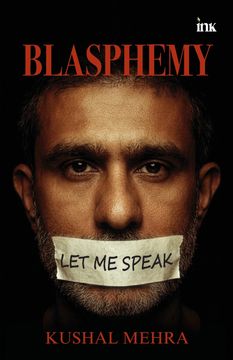
Blasphemy. Let me speak
Kushal Mehra
Blasphemy. Let me speak
Kushal Mehra (Author) · Occam · Paperback
Blasphemy. Let me speak
Kushal Mehra
In today's India, two words can end careers, ignite mobs, and silence debate: "hurt sentiments." But when did questioning become a crime? And how did a civilisation that once celebrated fearless philosophical debate become a society walking on eggshells? In Blasphemy: Let Me Speak, Kushal Mehra takes on one of the most contentious issues of our time-the idea of blasphemy itself. Drawing from history, philosophy, law, and contemporary politics, Mehra argues that the very notion of blasphemy is fundamentally alien to India's indigenous intellectual traditions. For millennia, Indian thought thrived on argument, scepticism, and dissent from the audacious materialism of the Cārvākas to the pluralism of the dharmic darśanas. Questioning was not punished; it was celebrated.
So how did a culture of open inquiry transform into a culture of outrage? Through a sharp and provocative analysis, this book traces the historical roots of blasphemy, its entry into India's legal framework under colonial rule, and its modern use as a tool to silence free speech. Examining landmark legal cases, religious sensitivities, and the growing climate of censorship, Mehra confronts a difficult question: Can a society truly progress if its ideas cannot be challenged?
Bold, unapologetic, and intellectually fearless, Blasphemy: Let Me Speak is not an attack on faith-it is a defence of freedom. It is a call to reclaim India's ancient spirit of debate, where ideas were tested through dialogue, not suppressed through intimidation. Because a civilisation that stops questioning eventually stops thinking.
Do you have a question about the book? Login to be able to add your own question.