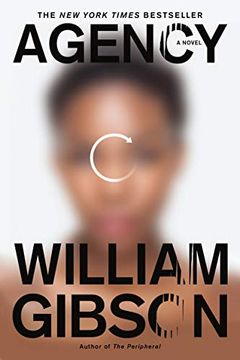
AN INSTANT NEW YORK TIMES BESTSELLER "ONE OF THE MOST VISIONARY, ORIGINAL, AND QUIETLY INFLUENTIAL WRITERS CURRENTLY WORKING"* returns with a sharply imagined follow-up to the New York Times bestselling The Peripheral. William Gibson has trained his eye on the future for decades, ever since coining the term "cyberspace" and then popularizing it in his classic speculative novel Neuromancer in the early 1980s. Cory Doctorow raved that The Peripheral is "spectacular, a piece of trenchant, far-future speculation that features all the eyeball kicks of Neuromancer." Now Gibson is back with Agency--a science fiction thriller heavily influenced by our most current events. Verity Jane, gifted app whisperer, takes a job as the beta tester for a new product: a digital assistant, accessed through a pair of ordinary-looking glasses. "Eunice," the disarmingly human AI in the glasses, manifests a face, a fragmentary past, and a canny grasp of combat strategy. Realizing that her cryptic new employers don't yet know how powerful and valuable Eunice is, Verity instinctively decides that it's best they don't. Meanwhile, a century ahead in London, in a different time line entirely, Wilf Netherton works amid plutocrats and plunderers, survivors of the slow and steady apocalypse known as the jackpot. His boss, the enigmatic Ainsley Lowbeer, can look into alternate pasts and nudge their ultimate directions. Verity and Eunice are her current project. Wilf can see what Verity and Eunice can't: their own version of the jackpot, just around the corner, and the roles they both may play in it. *The Boston Globe
William Gibson es uno de los escritores de ciencia ficción más influyentes y elogiados del mundo. Es autor de doce novelas (incluyendo La máquina diferencial coescrita con Bruce Sterling), una antología de relatos (Quemando cromo) y una colección de ensayos (Distrust That Particular Flavor). Considerado un visionario, difunde un potente discurso acerca de nuestros deseos culturales, miedos y obsesiones sobre temas como las multinacionales, la política global, los datos computarizados, la ingeniería genética, la cibernética, el miedo a lo tecnológico y, en última instancia, el significado de ser humano en una era infinitamente compleja.
Su famosa novela Neuromante acuñó el término «ciberespacio» y nos ofreció la primera aproximación a Internet. En siguientes obras superventas, Gibson nos ofreció descripciones proféticas y convincentes de lo que sería la prensa del corazón, la tele realidad y la nanotecnología. Su obra se ha visto influida por la de otros autores y académicos, además de por la tecnología, la cultura popular, el arte y la música. Gibson también ha colaborado en numerosas ocasiones en el campo de las artes escénicas, la música y el cine. Actualmente vive en Vancouver con su mujer.