Tracked shipping to South Africa with premium packaging for just R199 

Ship to
South Africa
0
  • argentina
  • chile
  • colombia
  • españa
  • méxico
  • perú
  • estados unidos
  • internacional

Select your country

Americas

Europe

Rest of the world

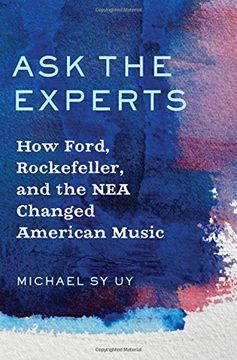
portada Ask the Experts: How Ford, Rockefeller, and the nea Changed American Music
Type
Physical Book
Publisher
Year
2020
Language
English
Pages
272
Format
Hardcover
ISBN13
9780197510445
Edition No.
1

Ask the Experts: How Ford, Rockefeller, and the nea Changed American Music

Michael Sy Uy (Author) · Oup Usa · Hardcover

Ask the Experts: How Ford, Rockefeller, and the nea Changed American Music - Michael Sy Uy

New Book Imported to South Africa
Delivery: 20 Aug - 28 Aug Shipping: 4 to 5 business days.
R 1,508
R 1,508

Synopsis "Ask the Experts: How Ford, Rockefeller, and the nea Changed American Music "

From the end of the Second World War through the U.S. Bicentennial, the National Endowment for the Arts, the Rockefeller Foundation, and the Ford Foundation granted close to $300 million (approximately $2.3 billion in 2017 dollars) in the field of music alone. In deciding what to fund, these three grantmaking institutions decided to "ask the experts," adopting seemingly objective, scientific models of peer review and specialist evaluation. They recruited music composers at elite institutions, professors from prestigious universities, and leaders of performing arts organizations. Among the most influential expert-consultants were Leonard Bernstein, Aaron Copland, Lukas Foss, and Milton Babbitt. The significance was two-fold: not only were male, Western art composers put in charge of directing large and unprecedented channels of public and private funds, but in doing so they also determined and defined what was meant by artistic excellence. They decided the fate of their peers and shaped the direction of music-making in this country. By asking the experts, the grantmaking institutions produced a concentrated and interconnected field of artists and musicians. Officers and directors utilized ostensibly objective financial tools like matching grants and endowments in an attempt to diversify and stabilize applicants' sources of funding, as well as the number of applicants they funded. Such economics-based strategies, however, relied more on personal connections among the wealthy and elite, rather than local community citizens. Ultimately, this history demonstrates how "expertise" served as an exclusionary form of cultural and social capital that prevented racial minorities and non-dominant groups from fully participating.

Customers reviews

Frequently Asked Questions about the Book

All books in our catalog are Original.
The book is written in English.
The binding of this edition is Hardcover.

Questions and Answers about the Book

Do you have a question about the book? Login to be able to add your own question.

Opinions about Bookdelivery

More customer reviews