Tracked shipping to South Africa with premium packaging for just R199 

Ship to
South Africa
0
  • argentina
  • chile
  • colombia
  • españa
  • méxico
  • perú
  • estados unidos
  • internacional

Select your country

Americas

Europe

Rest of the world

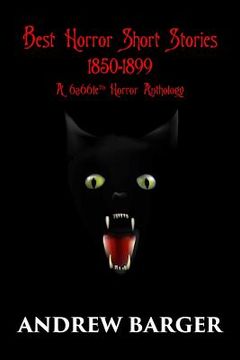
portada Best Horror Short Stories 1850-1899: A 6a66le Horror Anthology
Type
Physical Book
Illustrated by
Language
English
Pages
218
Format
Paperback
Dimensions
22.9 x 15.2 x 1.3 cm
Weight
0.33 kg.
ISBN13
9781933747576

Best Horror Short Stories 1850-1899: A 6a66le Horror Anthology

Bram Stoker (Author) · Arthur Conan Doyle (Author) · Andrew Barger (Illustrated by) · Bottletree Books · Paperback

Best Horror Short Stories 1850-1899: A 6a66le Horror Anthology - Arthur Conan Doyle

New Book Imported to South Africa
Delivery: 09 Jul - 03 Aug Shipping: 5 to 6 business days.
R 263
R 263

Synopsis "Best Horror Short Stories 1850-1899: A 6a66le Horror Anthology "

The best horror short stories from the last half of the nineteenth century are combined for the first time by Andrew Barger, award-winning author and editor of 6a66le: Best Horror Short Stories 1800-1849. Andrew has meticulously researched the finest Victorian horror short stories and combined them into one undeniable collection. He has added his familiar scholarly touch by annotating the stories, providing story background information, author photos and a list of horror stories considered. Historic Horror. The best horror short stories from the last half of the 19th century include nightmare tales by Bram Stoker, Arthur Conan Doyle, Joseph Le Fanu, W. C. Morrow, H. G. Wells, Arthur Machen, Charlotte Perkins Gilman, and other early founders of the horror tale. A Terror Tour Guide (2016) by Andrew Barger (A leading voice in the gothic literature space, Andrew sets the stage for this anthology of nightmares.) The Pioneers of Pike's Peak (1897) by Basil Tozer (Hoards of giant spiders on a Colorado mountain. What could go wrong?) Lot No. 249 (1892) by Sir Arthur Conan Doyle (Perhaps the premier mummy horror story ever recorded from the master that is Sir Arthur Conan Doyle is measured out to its climatic ending.) The Yellow Wallpaper (1892) by Charlotte Perkins Gilman (Explore the depths of insanity.) Green Tea (1871) by Joseph Le Fanu (One of the most haunting horror stories by the Irish master.) What Was It? (1859) by Fitz James O'Brien (Sometimes the worst horror is one you can't see.) Pollock and the Porroh Man (1897) by H. G. Wells (Wells takes us deep into the jungle and its wrought supernatural horror.) The Spider of Guyana (1857) by Erckmann-Chatrian (The first giant spider horror story is one of its best.) The Squaw (1893) by Bram Stoker (The author of Dracula never disappoints.) The Great God Pan (1894) by Arthur Machen (Mythic horror that gained much praise from H. P. Lovecraft.) His Unconquerable Enemy (1889) by W. C. Morrow (A fiendish tale of torture sees Morrow at his best.) Horror Short Stories Considered (Andrew concludes the horror anthology by listing every horror short story he read to pick the very best.) Read the premier horror anthology for the last half of the nineteenth century tonight! "But it now struck me for the first time that there must be one great and ruling embodiment of fear, a King of Terrors to which all others must succumb." 1859 "What Was It?" Fitz James O'Brien
Bram Stoker
  (Author)
View Author's Page
Abraham "Bram" Stoker (Clontarf; November 8, 1847-London; April 20, 1912) was an Irish novelist and writer, known for his novel Dracula

His early horror stories, such as "The Crystal Cup" (1872), were published by the London Society, and The Chain of Destiny in the Shamrock magazine. In 1876, while working as a civil servant, he wrote a textbook named The Duties of Clerks of Petty Sessions in Ireland (1879), this book was used as a reference for a long time

Being a theater critic for the Dublin Evening Mail, co-owned by the famous Gothic novelist Sheridan Le Fanu, one of the most important of his time for stories like Carmilla, about a vampire, greatly influenced Stoker when writing Dracula. Stoker's critique of the play was high praise for the performance in Hamlet by actor Henry Irving, who hired him to be his personal secretary and manager of the Lyceum Theatre in London

While working for Irving, he was a literary critic for the Daily Telegraph and wrote several novels like The Snake's Pass (1890) and Dracula (1897) and, after Irving's death in 1905, The Lady of the Shroud (1909) and The Lair of the White Worm (1911)

His wife was the administrator of his literary estate, and she made known works such as what would be the introduction to Dracula, the short story Dracula's Guest
See more
See less
Arthur Conan Doyle
  (Author)
View Author's Page
Sir Arthur Conan Doyle (Edinburgh, 1859 - Crowborough, United Kingdom, 1930) considered the master of detective literature was a writer and doctor born in Scotland, mainly known for having created the very famous character Sherlock Holmes, the most well-known detective of all times, cyclically adapted for TV and cinema

He studied at the universities of Stonyhurst and Edinburgh, where he graduated in medicine. Between 1882 and 1890, he worked as a doctor in Southsea, England.

To supplement his meager income, he wrote a mystery novel titled A Study in Scarlet, which became the first of sixty-eight stories featuring one of the most famous detectives in literature: Sherlock Holmes.
See more
See less

Customers reviews

Frequently Asked Questions about the Book

All books in our catalog are Original.
The book is written in English.
The binding of this edition is Paperback.

Questions and Answers about the Book

Do you have a question about the book? Login to be able to add your own question.

Opinions about Bookdelivery

More customer reviews