Tracked shipping to South Africa with premium packaging for just R199 

Ship to
South Africa
0
  • argentina
  • chile
  • colombia
  • españa
  • méxico
  • perú
  • estados unidos
  • internacional

Select your country

Americas

Europe

Rest of the world

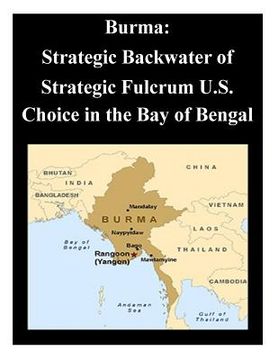
portada Burma: Strategic Backwater of Strategic Fulcrum U.S. Choice in the Bay of Bengal
Type
Physical Book
Publisher
Language
English
Pages
138
Format
Paperback
Dimensions
28.0 x 21.6 x 0.8 cm
Weight
0.34 kg.
ISBN13
9781500750473

Burma: Strategic Backwater of Strategic Fulcrum U.S. Choice in the Bay of Bengal

Joint Forces Staff College (Author) · Createspace · Paperback

Burma: Strategic Backwater of Strategic Fulcrum U.S. Choice in the Bay of Bengal - Joint Forces Staff College

New Book Imported to South Africa
Delivery: 21 Aug - 04 Sep Shipping: 16 to 20 business days.
R 452
R 452

Synopsis "Burma: Strategic Backwater of Strategic Fulcrum U.S. Choice in the Bay of Bengal"

The United States began expanding its engagement with Burma (Myanmar) in 2009, which went largely unnoticed outside of the Asian studies community. Burma's cautious political opening and pursuit of cease fire agreements to end decades-old ethnic rebellions presented an opportunity for the U.S. to pursue engagement to advance the Obama administration's Asia policy of linking the U.S. economically and militarily with East and South Asia. Burma's geographic location, resources, and emerging role in ASEAN make it a critical linkage in this policy framework. Burma's history is complicated, fraught with conflict still visible in its political, social, and military situation, but it is of sufficient importance that national and transnational actors are maneuvering for position there. The U.S. is already linked to Burma through its economic policies in Asia, and so has incentive to influence Burma's development to reach favorable outcomes in the region. However, Burma has many barriers to growth and reform. Realizing U.S. objectives with respect to Burma may depend on Burma overcoming those barriers. The U.S. may be able to help, but further involvement in Burma holds risk for the U.S. This paper describes the relevant Burmese history, the current maneuvers by national and transnational actors in the region, the U.S. approach to Burma. It then outlines a set of recommendations to clarify the U.S. approach and potentially expand engagement beyond those currently visible that support stability, prosperity, and human rights in Burma while advancing U.S. interests.

Customers reviews

Frequently Asked Questions about the Book

All books in our catalog are Original.
The book is written in English.
The binding of this edition is Paperback.

Questions and Answers about the Book

Do you have a question about the book? Login to be able to add your own question.

Opinions about Bookdelivery

More customer reviews