Tracked shipping to South Africa with premium packaging for just R199 

Ship to
South Africa
0
  • argentina
  • chile
  • colombia
  • españa
  • méxico
  • perú
  • estados unidos
  • internacional

Select your country

Americas

Europe

Rest of the world

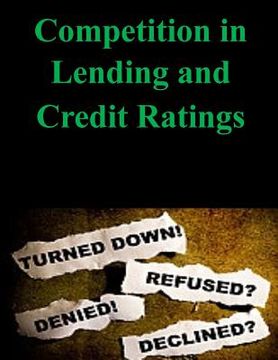
portada Competition in Lending and Credit Ratings
Type
Physical Book
Publisher
Language
English
Pages
54
Format
Paperback
Dimensions
27.9x21.6x0.3 cm
Weight
0.15 kg.
ISBN13
9781502535122

Competition in Lending and Credit Ratings

Javed I. Ahmed (Author) · Createspace · Paperback

Competition in Lending and Credit Ratings - Ahmed, Javed I. ; Federal Reserve Board

New Book Imported to South Africa
Delivery: 26 Oct - 06 Nov Shipping: 16 to 20 business days.
R 411
R 411

Synopsis "Competition in Lending and Credit Ratings"

This book relates corporate credit rating quality to competition in lending between the public bond market and banks. In the model, the monopolistic rating agency's choice of price and quality leads to an endogenous threshold separating low-quality bank-dependent issuers from higher-quality issuers with access to public debt. In abaseline equilibrium with expensive bank lending, this separation across debt market segments provides information, but equilibrium ratings are uninformative. A positive shock to private (bank) relative to public lending supply allows banks to compete with public lenders for high-quality issuers, which threatens rating agency profits, and informative ratings result to prevent defection of high-quality borrowers to banks. This prediction is tested by analyzing two events that increased the relative supply of private vs. public lending sharply: legislation in 1994 that reduced barriers to interstate bank lending and the temporary shutdown of the high-yield bond market in 1989. After each event, the quality of ratings (based on their impact on bond yield spreads) increasedfor affected issuers. The analysis suggests that that the quality of credit ratings plays an important role in financial stability, as strategic behavior by the rating agency in an issuer-pays setting dampens the influence of macroeconomic shocks. It also explains the use of informative unsolicited credit ratings to prevent unrated bond issues, particularly during good times. Additionally, the controversial issuer-pays model of ratings leads to more efficient outcomes than investor-pays alternatives.

Customers reviews

Frequently Asked Questions about the Book

All books in our catalog are Original.
The book is written in English.
The binding of this edition is Paperback.

Questions and Answers about the Book

Do you have a question about the book? Login to be able to add your own question.

Opinions about Bookdelivery

More customer reviews