Tracked shipping to South Africa with premium packaging for just R199 

Ship to
South Africa
0
  • argentina
  • chile
  • colombia
  • españa
  • méxico
  • perú
  • estados unidos
  • internacional

Select your country

Americas

Europe

Rest of the world

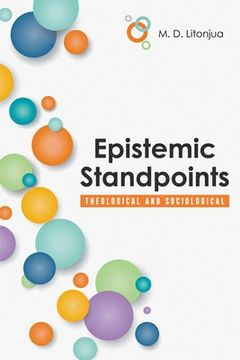
portada Epistemic Standpoints: Theological and Sociological
Type
Physical Book
Publisher
Language
English
Pages
358
Format
Paperback
Dimensions
22.9x15.2x2 cm
Weight
0.53 kg.
ISBN13
9781647491505

Epistemic Standpoints: Theological and Sociological

M. D. Litonjua (Author) · Go to Publish · Paperback

Epistemic Standpoints: Theological and Sociological - Litonjua, M. D.

New Book Imported to South Africa
Delivery: 22 Sep - 30 Sep Shipping: 6 to 7 business days.
R 348
R 348

Synopsis "Epistemic Standpoints: Theological and Sociological"

Pilate asked "What is truth?" We too struggle with the question and we search for an answer. Correspondence theory told us that we grasp with our external senses objective reality, and the truth lies in the correspondence of the mind to external objective reality. The problem is that, except for basic mathematical equations, this explanation does not account for the diversity of opinions, the conflict of ideas, and the clash of ideologies. This does not include, of course, outright lies, denial of facts, manipulation of data, the malice of fake news.We do not see things with the naked eye as they are. We see them from a certain perspective, from a specific point of view. A tree is not simply a tree. A tree provides restful shade to a weary traveler. It is useful lumber for the logger. It yields oxygen for a polluted atmosphere in the eyes of an environmentalist. It is an inspiration for a poem by Joyce Kilmer. In other words, it is foundationally a matter of, using a philosophical word, one's epistemology. It involves one's interests and concerns, it depends on what one considers important in life, the meaning he searches for in society and the world, how one conceives what life should be. We see, appreciate, judge from an epistemic standpoint. The acknowledgement of different epistemic standpoints is the basis for dialogue, for the respectful discussion of differences of opinion, for the legitimate clash of ideologies. The acceptance of multiple standpoints is also the foundation for cooperation in spite of differences, for the search of common solutions to common problems, and for solidarity for the common good.

Customers reviews

Frequently Asked Questions about the Book

All books in our catalog are Original.
The book is written in English.
The binding of this edition is Paperback.

Questions and Answers about the Book

Do you have a question about the book? Login to be able to add your own question.

Opinions about Bookdelivery

More customer reviews