Tracked shipping to South Africa with premium packaging for just R199 

Ship to
South Africa
0
  • argentina
  • chile
  • colombia
  • españa
  • méxico
  • perú
  • estados unidos
  • internacional

Select your country

Americas

Europe

Rest of the world

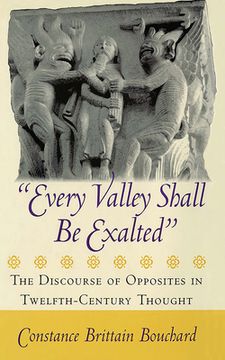
portada Every Valley Shall Be Exalted: The Discourse of Opposites in Twelfth-Century Thought
Type
Physical Book
Language
English
Pages
192
Format
Paperback
Dimensions
22.9 x 15.2 x 1.1 cm
Weight
0.28 kg.
ISBN13
9781501713644

Every Valley Shall Be Exalted: The Discourse of Opposites in Twelfth-Century Thought

Constance Brittain Bouchard (Author) · Cornell University Press · Paperback

Every Valley Shall Be Exalted: The Discourse of Opposites in Twelfth-Century Thought - Bouchard, Constance Brittain

New Book Imported to South Africa
Delivery: 08 Sep - 21 Sep Shipping: 16 to 20 business days.
R 1,025
R 1,025

Synopsis "Every Valley Shall Be Exalted: The Discourse of Opposites in Twelfth-Century Thought"

In high medieval France, men and women saw the world around them as the product of tensions between opposites. Imbued with a Christian culture in which a penniless preacher was also the King of Kings and the last were expected to be first, twelfth-century thinkers brought order to their lives through the creation of opposing categories. In a highly original work, Constance Brittain Bouchard examines this poorly understood component of twelfth-century thought, one responsible, in her view, for the fundamental strangeness of that culture to modern thinking.Scholars have long recognized that dialectical reasoning was the basic approach to philosophical, legal, and theological matters in the high Middle Ages. Bouchard argues that this way of thinking and categorizing--which she terms a "discourse of opposites"--permeated all aspects of medieval thought. She rejects suggestions that it was the result of imprecision, and provides evidence that people of that era sought not to reconcile opposing categories but rather to maintain them. Bouchard scrutinizes the medieval use of opposites in five broad areas: scholasticism, romance, legal disputes, conversion, and the construction of gender. Drawing on research in a series of previously unedited charters and the earliest glossa manuscripts, she demonstrates that this method of constructing reality was a constitutive element of the thought of the period.

Customers reviews

Frequently Asked Questions about the Book

All books in our catalog are Original.
The book is written in English.
The binding of this edition is Paperback.

Questions and Answers about the Book

Do you have a question about the book? Login to be able to add your own question.

Opinions about Bookdelivery

More customer reviews