Tracked shipping to South Africa with premium packaging for just R199 

Ship to
South Africa
0
  • argentina
  • chile
  • colombia
  • españa
  • méxico
  • perú
  • estados unidos
  • internacional

Select your country

Americas

Europe

Rest of the world

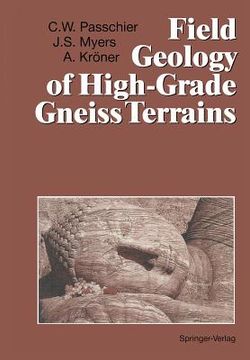
portada field geology of high-grade gneiss terrains
Type
Physical Book
Publisher
Year
1990
Language
English
Pages
150
Format
Paperback
Dimensions
23.9 x 17.0 x 1.0 cm
Weight
0.29 kg.
ISBN
3540530533
ISBN13
9783540530534

field geology of high-grade gneiss terrains

Cees W. Passchier (Author) · John S. Myers (Author) · Alfred Kröner (Author) · Springer · Paperback

field geology of high-grade gneiss terrains - Passchier, Cees W. ; Myers, John S. ; Kröner, Alfred

Cheaper New Book Imported to South Africa
Delivery: 02 Sep - 15 Sep Shipping: 12 to 16 business days.
R 1,001
Faster New Book Imported to South Africa
Delivery: 20 Aug - 28 Aug Shipping: 4 to 5 business days.
R 1,269
R 1,001

Synopsis "field geology of high-grade gneiss terrains"

Although there are numerous publications on the geology of high-grade gneiss terrains, few descriptions exist of how to map and carry out structural analysis in these terrains. Textbooks on structural geology concentrate on technIques appli- cable to low-grade terrains. Geologists who have no experience of mapping high-grade gneisses are often at a loss as to how to apply techniques to high- grade rocks that were developed for low to medium grade metamorphic terrains. Any study of deep crustal processes and their development through time should begin with examination of the primary data source - outcrops of high- grade metamorphic terrains. We feel that the urge to apply advanced techniques of fabric analysis, petrology, geochemistry, isotope geochemistry and age deter- mination to these rocks often results in brief sampling trips in which there is little, if any analysis of the structural and metamorphic history revealed by outcrop patterns. Many studies of the metamorphic petrology and geochemistry of high-grade gneiss terrains make ineffective use of available field data, often because the authors are unaware of structural complexities and of the ways to recognise and use them. This is unfortunate, because much data can be collected in the field at minimal cost that cannot easily, if at all, be obtained from material in the laboratory. The primary igneous or sedimentary nature of a rock, the relative age of intrusive veins, and the sequence of deformation that they under- went, can usually best be determined by straightforward observation in the field.

Customers reviews

Frequently Asked Questions about the Book

All books in our catalog are Original.
The book is written in English.
The binding of this edition is Paperback.

Questions and Answers about the Book

Do you have a question about the book? Login to be able to add your own question.

Opinions about Bookdelivery

More customer reviews