Tracked shipping to South Africa with premium packaging for just R199 

Ship to
South Africa
0
  • argentina
  • chile
  • colombia
  • españa
  • méxico
  • perú
  • estados unidos
  • internacional

Select your country

Americas

Europe

Rest of the world

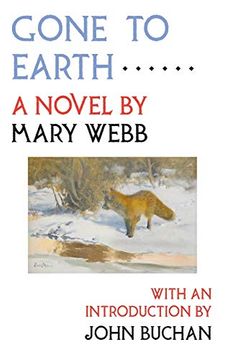
portada Gone to Earth
Type
Physical Book
Introduction by
Publisher
Year
2014
Language
English
Pages
292
Format
Paperback
Dimensions
20.3x12.7x1.5 cm
Weight
0.29 kg.
ISBN13
9780992523442

Gone to Earth

Mary Webb (Author) · John Buchan (Introduction by) · Michael Walmer · Paperback

Gone to Earth - Webb, Mary ; Buchan, John

Cheaper New Book Imported to South Africa
Delivery: 15 Oct - 26 Oct Shipping: 4 to 6 business days.
R 306
Faster New Book Imported to South Africa
Delivery: 13 Oct - 21 Oct Shipping: 2 to 3 business days.
R 389
R 306

Synopsis "Gone to Earth "

"Once again it rang out, and at its awful reiteration the righteous men and the hunt ceased to be people of any class or time or creed, and became creatures swayed by one primeval passion - fear. They crouched and shuddered like beaten dogs as the terrible cry once more roused the shivering echoes: 'Gone to earth! Gone to earth!'" Mary Webb's second novel, first published in 1917, is one of the most unusual of the twentieth century. It is strikingly modern in some of its themes, but is also markedly a rural fable. It is as if a west country medieval storyteller had whispered in the ear of Thomas Hardy or Emily Bronte just as they were spinning a tale... Hazel, the lonely young daughter of harpist, beeman and coffin-maker Abel Woodus, has been brought up very loosely by him after the death of his gypsy wife. He is a cool and distant man; their isolated tumbledown cottage deep in the Shropshire countryside rarely sees a visitor. Hazel has turned instead to nature, and particularly animals, as her guide to life and love. She has an intense natural feeling for any creature that suffers, and looks at the outer world as inimical to her and those she cares for, in particular her best friend, Foxy, a young vixen she has rescued. But Hazel is growing older, and men are beginning to notice her stormy youthful beauty. Into her superstitious, naïve, uncomprehending and fearful mindscape come harbingers of the disturbing outer world. First her cousin Albert is shaken when he sees her again after a long lapse. Then, on the overnight walking journey home from Albert's house in the big town, Hazel loses her way, and is taken up by Jack Reddin, a sensualist local squire who cannot believe his luck in coming across her. She escapes his clutches in the nick of time with the help of his sour manservant, but Jack is determined to find her and claim her for his own, scouring the countryside asking after her. Still managing to evade him, Hazel attends a local glee or choir-meeting where her father harps and she sings, and it is there that yet another man is astonished by what he sees. This is Edward Marston, the tender young minister of a small chapel on a steep hill, called locally God's Little Mountain. The scene is now set for a titanic struggle between lustful Jack and gentle Edward over Hazel, where all their frailties and failings will tell terribly. Hazel is caught in a bewildering trap of desire and pain in which her changeable, independence-loving, wild young heart is tested to its limit. With the intense, spiralling, atmospheric prose of a folktale, Mary Webb unforgettably tells an earthy story of fear, desire, love, and violence both spiritual and physical, where the respectable world's assumptions are severely challenged by one of life's originals. Reviewing it in the Times Literary Supplement on its first publication, Rebecca West said 'She is a genius, and I shouldn't mind wagering that she is going to be the most distinguished writer of our generation.'
Mary Webb
  (Author)
View Author's Page
(Shropshire 1881 - St. Leonards on Sea 1927) was an English novelist and poet. She began writing when she was ten years old, but always ended up burning all her poems. However, once her brother read one and without telling her, he took it to the Shrewsbury Chronicle, which published it anonymously. Mary was amazed at the warm reception it received. From the age of twenty, Mary Webb had developed Graves-Basedow disease, and that suffering, as well as her longing for Shropshire, would inspire her for Precious Bane (1924). Despite winning the Prix Femina Vie Heureuse with this novel, she did not achieve success until after her early death in 1927, when Prime Minister Stanley Baldwin referred to her as "a forgotten genius".
See more
See less

Customers reviews

Frequently Asked Questions about the Book

All books in our catalog are Original.
The book is written in English.
The binding of this edition is Paperback.

Questions and Answers about the Book

Do you have a question about the book? Login to be able to add your own question.

Opinions about Bookdelivery

More customer reviews