Tracked shipping to South Africa with premium packaging for just R199 

Ship to
South Africa
0
  • argentina
  • chile
  • colombia
  • españa
  • méxico
  • perú
  • estados unidos
  • internacional

Select your country

Americas

Europe

Rest of the world

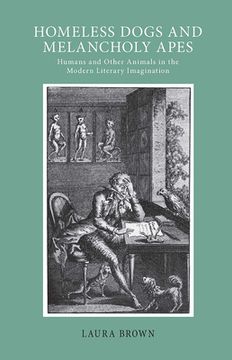
portada Homeless Dogs and Melancholy Apes: Humans and Other Animals in the Modern Literary Imagination
Type
Physical Book
Language
English
Pages
176
Format
Paperback
Dimensions
22.9 x 15.2 x 1.0 cm
Weight
0.26 kg.
ISBN13
9781501713552

Homeless Dogs and Melancholy Apes: Humans and Other Animals in the Modern Literary Imagination

Laura S. Brown (Author) · Cornell University Press · Paperback

Homeless Dogs and Melancholy Apes: Humans and Other Animals in the Modern Literary Imagination - Brown, Laura S.

New Book Imported to South Africa
Delivery: 03 Sep - 11 Sep Shipping: 13 to 14 business days.
R 686
R 686

Synopsis "Homeless Dogs and Melancholy Apes: Humans and Other Animals in the Modern Literary Imagination"

In eighteenth-century England, the encounter between humans and other animals took a singular turn with the discovery of the great apes and the rise of bourgeois pet keeping. These historical changes created a new cultural and intellectual context for the understanding and representation of animal-kind, and the nonhuman animal has thus played a significant role in imaginative literature from that period to the present day.In Homeless Dogs and Melancholy Apes, Laura Brown shows how the literary works of the eighteenth century use animal-kind to bring abstract philosophical, ontological, and metaphysical questions into the realm of everyday experience, affording a uniquely flexible perspective on difference, hierarchy, intimacy, diversity, and transcendence. Writers of this first age of the rise of the animal in the modern literary imagination used their nonhuman characters--from the lapdogs of Alexander Pope and his contemporaries to the ill-mannered monkey of Frances Burney's Evelina or the ape-like Yahoos of Jonathan Swift--to explore questions of human identity and self-definition, human love and the experience of intimacy, and human diversity and the boundaries of convention. Later literary works continued to use imaginary animals to question human conventions of form and thought.Brown pursues this engagement with animal-kind into the nineteenth century--through works by Mary Shelley, Charles Dickens, and Elizabeth Barrett Browning--and into the twentieth, with a concluding account of Paul Auster's dog-novel, Timbuktu. Auster's work suggests that--today as in the eighteenth century--imagining other animals opens up a potential for dissonance that creates distinctive opportunities for human creativity.

Customers reviews

Frequently Asked Questions about the Book

All books in our catalog are Original.
The book is written in English.
The binding of this edition is Paperback.

Questions and Answers about the Book

Do you have a question about the book? Login to be able to add your own question.

Opinions about Bookdelivery

More customer reviews