Tracked shipping to South Africa with premium packaging for just R199 

Ship to
South Africa
0
  • argentina
  • chile
  • colombia
  • españa
  • méxico
  • perú
  • estados unidos
  • internacional

Select your country

Americas

Europe

Rest of the world

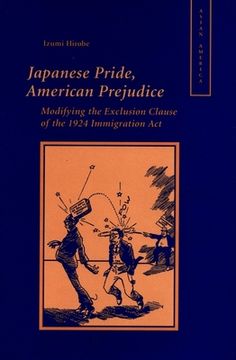
portada japanese pride, american prejudice: modifying the exclusion clause of the 1924 immigration law
Type
Physical Book
Year
2002
Language
English
Pages
344
Format
Hardcover
Dimensions
22.9x15.2x2.4 cm
Weight
0.68 kg.
ISBN
0804738130
ISBN13
9780804738132

japanese pride, american prejudice: modifying the exclusion clause of the 1924 immigration law

Izumi Hirobe (Author) · Stanford University Press · Hardcover

japanese pride, american prejudice: modifying the exclusion clause of the 1924 immigration law - Hirobe, Izumi

Cheaper New Book Imported to South Africa
Delivery: 13 Oct - 26 Oct Shipping: 12 to 16 business days.
R 1,355
Faster New Book Imported to South Africa
Delivery: 02 Oct - 12 Oct Shipping: 5 to 6 business days.
R 1,473
R 1,355

Synopsis "japanese pride, american prejudice: modifying the exclusion clause of the 1924 immigration law"

Adding an important new dimension to the history of U.S.-Japan relations, this book reveals that an unofficial movement to promote good feeling between the United States and Japan in the 1920s and 1930s only narrowly failed to achieve its goal: to modify the so-called anti-Japanese exclusion clause of the 1924 U.S. immigration law. It is well known that this clause caused great indignation among the Japanese, and scholars have long regarded it as a major contributing factor in the final collapse of U.S.-Japan relations in 1941. Not generally known, however, is that beginning immediately after the enactment of the law, private individuals sought to modify the exclusion clause in an effort to stabilize relations between the two countries. The issue was considered by American and Japanese delegates at almost all subsequent U.S.-Japan diplomatic negotiations, including the 1930 London naval talks and the last-minute attempts to prevent war in 1941. However, neither the U.S. State Department nor the Japanese Foreign Office was able to take concrete measures to resolve the issue. The State Department wanted to avoid appearing to meddle with Congressional prerogatives, and the Foreign Office did not want to be seen as intruding in American domestic affairs. This official reluctance to take action opened the way for major efforts in the private sector to modify the exclusion clause. The book reveals how a number of citizens in the United States--mainly clergy and business people--persevered in their efforts despite the obstacles presented by anti-Japanese feeling and the economic dislocations of the Depression. One of the notable disclosures in the book is that this determined private push for improved relations continued even after the 1931 Manchurian Incident.

Customers reviews

Frequently Asked Questions about the Book

All books in our catalog are Original.
The book is written in English.
The binding of this edition is Hardcover.

Questions and Answers about the Book

Do you have a question about the book? Login to be able to add your own question.

Opinions about Bookdelivery

More customer reviews