Tracked shipping to South Africa with premium packaging for just R199 

Ship to
South Africa
0
  • argentina
  • chile
  • colombia
  • españa
  • méxico
  • perú
  • estados unidos
  • internacional

Select your country

Americas

Europe

Rest of the world

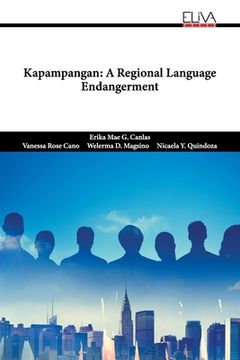
portada Kapampangan: A Regional Language Endangerment
Type
Physical Book
Publisher
Language
English
Pages
84
Format
Paperback
Dimensions
22.9x15.2x0.4 cm
Weight
0.12 kg.
ISBN13
9789994982752

Kapampangan: A Regional Language Endangerment

Vanessa Rose Cano (Author) · Welerma D. Magsino (Author) · Nicaela Y. Quindoza (Author) · Eliva Press · Paperback

Kapampangan: A Regional Language Endangerment - Cano, Vanessa Rose ; Magsino, Welerma D. ; Quindoza, Nicaela Y.

New Book Imported to South Africa
Delivery: 06 Nov - 16 Nov Shipping: 5 to 6 business days.
R 924
R 924

Synopsis "Kapampangan: A Regional Language Endangerment"

"Kapampángans are killing Kapampángans. Not by guns nor swords, nor weapons of any kind... but by linguicide."- Kevin Montalbo This book mainly tackles the endangerment of Kapampangan as one of the regional languages in the Philippines. Indung Kapampangan is home to the Austronesian language known as the Kapampangan. The Philippines' northern island of Luzon is where the homeland of the Kapampángan is situated. Its center is the province of Pampanga, which encompasses Bulacan, Bataan, Nueva Ecija, and the southern portion of Tarlac. Since approximately 2 million people speak Kapampangan, the language does not initially appear to be in danger. However, a language's population alone cannot determine if it is endangered. Studying its in-depth factors, the Kapampangan language is gradually being forgotten as a mother tongue, is dying, and is in terminal decline, particularly in highly urbanized cities of Pampanga.The primary goal of this paper is to determine the factors contributing to the endangerment of the language, specifically to the Junior High School students at Systems Plus College Foundation. The respondents' demographic profiles (age, city/municipality, and family status quo), as well as the nine predicting factors (Intergenerational Language transmission, Absolute numbers of speakers, Proportion of speakers within the total population, Loss of existing language domains, Response to new domains and media, Accessibility of written materials for language education and literacy, Governmental and institutional language attitudes and policies, Community members attitude towards their own language, and Amount and quality of documentation), were observed.

Customers reviews

Frequently Asked Questions about the Book

All books in our catalog are Original.
The book is written in English.
The binding of this edition is Paperback.

Questions and Answers about the Book

Do you have a question about the book? Login to be able to add your own question.

Opinions about Bookdelivery

More customer reviews