Tracked shipping to South Africa with premium packaging for just R199 

Ship to
South Africa
0
  • argentina
  • chile
  • colombia
  • españa
  • méxico
  • perú
  • estados unidos
  • internacional

Select your country

Americas

Europe

Rest of the world

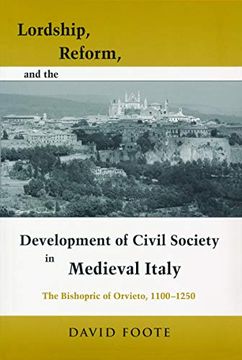
portada Lordship, Reform, and the Development of Civil Society in Medieval Italy: The Bishopric of Orvieto, 1100-1250 (Publications in Medieval Studies)
Type
Physical Book
Year
2004
Language
English
Pages
272
Format
Hardcover
ISBN
0268028710
ISBN13
9780268028718

Lordship, Reform, and the Development of Civil Society in Medieval Italy: The Bishopric of Orvieto, 1100-1250 (Publications in Medieval Studies)

David Foote (Author) · University Of Notre Dame Press · Hardcover

Lordship, Reform, and the Development of Civil Society in Medieval Italy: The Bishopric of Orvieto, 1100-1250 (Publications in Medieval Studies) - David Foote

Cheaper New Book Imported to South Africa
Delivery: 20 Aug - 03 Sep Shipping: 11 to 15 business days.
R 1,289
Faster New Book Imported to South Africa
Delivery: 11 Aug - 19 Aug Shipping: 4 to 5 business days.
R 1,558
R 1,289

Synopsis "Lordship, Reform, and the Development of Civil Society in Medieval Italy: The Bishopric of Orvieto, 1100-1250 (Publications in Medieval Studies) "

In his examination of the bishopric of Orvieto from 1100 to 1250, David Foote reveals how three defining developments of the High Middle Ages―the feudal revolution, ecclesiastical reform, and state building―played out in a typical medieval Italian commune. He challenges scholarship that overemphasizes the secular nature of Italian city-states by showing the extent to which developments in ecclesiastical institutions provided a model for the formation of civic institutions and defined a commune’s political and religious culture. Following the collapse of Carolingian authority in the tenth century, Italy experienced a period of political chaos. Rural lords, unrestrained by central authority, fought to dominate the countryside. Bishoprics, by virtue of their temporal and spiritual authority over dioceses, emerged in the midst of this disorder as the most effective institutions for rebuilding political authority at the local level. The Orvietan bishopric formed the center of an urban coalition attempting to conquer and pacify their contado, or surrounding countryside. Orvieto’s bishopric assisted the early city-state in administering its territory by developing innovative methods of written administration and record keeping. As the center of a wide range of religious interests, the bishopric was often caught between competing political and religious actors who leveraged their interests through ecclesiastical institutions and resources. This interaction had a profound effect on the city’s political and religious culture. As Orvietans struggled to define the norms that would govern their society, they had to adapt their quest for political power and autonomy to their religious values. David Foote’s deeply researched new book illuminates the process of state building in its early stages and the formation of political and religious culture in Europe during the High Middle Ages.

Customers reviews

Frequently Asked Questions about the Book

All books in our catalog are Original.
The book is written in English.
The binding of this edition is Hardcover.

Questions and Answers about the Book

Do you have a question about the book? Login to be able to add your own question.

Opinions about Bookdelivery

More customer reviews