Tracked shipping to South Africa with premium packaging for just R199 

Ship to
South Africa
0
  • argentina
  • chile
  • colombia
  • españa
  • méxico
  • perú
  • estados unidos
  • internacional

Select your country

Americas

Europe

Rest of the world

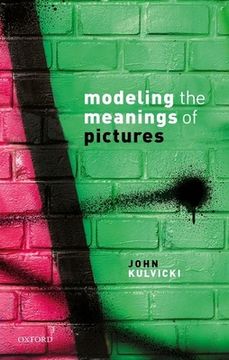
portada Modeling the Meanings of Pictures: Depiction and the Philosophy of Language
Type
Physical Book
Year
2020
Language
English
Pages
176
Format
Hardcover
Dimensions
21.8 x 14.0 x 2.0 cm
Weight
0.34 kg.
ISBN13
9780198847472

Modeling the Meanings of Pictures: Depiction and the Philosophy of Language

John V. Kulvicki (Author) · Oxford University Press · Hardcover

Modeling the Meanings of Pictures: Depiction and the Philosophy of Language - Kulvicki, John V.

New Book Imported to South Africa
Delivery: 06 Aug - 14 Aug Shipping: 4 to 5 business days.
R 1,885
R 1,885

Synopsis "Modeling the Meanings of Pictures: Depiction and the Philosophy of Language "

John Kulvicki offers an account of the many ways in which pictures can be meaningful which is inspired by the philosophy of language. Pictures are important parts of communicative acts, along with language, gesture, facial expressions, and props. They express wide ranges of thoughts, make assertions, offer warnings, instructions, and commands. Pictures are also representations. They have meanings, which help explain the range of communicative uses to which they can be put. Modelling the meanings of pictures is accounting for the ways in which pictures manage to be meaningful, with an eye toward how those meanings let us use them as we do. By framing pictures with the philosophy of language, we acquire new perspectives on the many things we can do with them. Sometimes, pictures are used as descriptions--he looks like this!--while sometimes they are used more like singular terms--find him!, while showing a mug shot. Most picture-making cultures also have iconographies, but this is usually put to one side in discussions of pictures, if it is mentioned at all. Likewise, some uses of pictures, especially in advertising, are metaphorical, and very little has been said about metaphor in pictures. Pictures are also related in important ways to other kinds of representations like maps, and this book provides a new way of understanding what makes them alike and different. By showing that pictures are very different from languages, this book also shows that the tools developed with language in mind are not actually specific to linguistic phenomena.

Customers reviews

Frequently Asked Questions about the Book

All books in our catalog are Original.
The book is written in English.
The binding of this edition is Hardcover.

Questions and Answers about the Book

Do you have a question about the book? Login to be able to add your own question.

Opinions about Bookdelivery

More customer reviews