Tracked shipping to South Africa with premium packaging for just R199 

Ship to
South Africa
0
  • argentina
  • chile
  • colombia
  • españa
  • méxico
  • perú
  • estados unidos
  • internacional

Select your country

Americas

Europe

Rest of the world

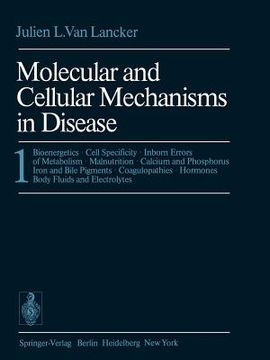
portada molecular and cellular mechanisms in disease: 1: bioenergetics . cell specificity . inborn errors of metabolism . malnutrition . calcium and phosphoru
Type
Physical Book
Publisher
Year
2011
Language
English
Pages
604
Format
Paperback
Dimensions
27.9 x 21.0 x 3.3 cm
Weight
1.44 kg.
ISBN
3642659691
ISBN13
9783642659690

molecular and cellular mechanisms in disease: 1: bioenergetics . cell specificity . inborn errors of metabolism . malnutrition . calcium and phosphoru

J. L. Vanlancker (Author) · Springer · Paperback

molecular and cellular mechanisms in disease: 1: bioenergetics . cell specificity . inborn errors of metabolism . malnutrition . calcium and phosphoru - Vanlancker, J. L.

Cheaper New Book Imported to South Africa
Delivery: 02 Sep - 11 Sep Shipping: 12 to 14 business days.
R 1,045
Faster New Book Imported to South Africa
Delivery: 20 Aug - 28 Aug Shipping: 4 to 5 business days.
R 1,269
R 1,045

Synopsis "molecular and cellular mechanisms in disease: 1: bioenergetics . cell specificity . inborn errors of metabolism . malnutrition . calcium and phosphoru"

In spite of ingenious experiments, imaginative theories, and unshakable faith in supreme forces, there is no way to know how life began. What is certain is that in the course of the development of the universe existing sources of energy fused to generate atoms, and atoms mingled to become small molecules. At some point by chance or design-according to one's belief, but no one's evidence-small molecules such as hydrogen, oxygen, carbon dioxide, water, and ammonia reacted to yield larger molecules with the property most essential to life: self-replication. Such molecules had to achieve a proper balance between the stability needed for their survival in the environment and the mutability for the generation of many forms of life. How amino acids were created or how DNA, RNA, and proteins developed remains a mystery. But we know that a simple core of nucleic acid embedded in a protein coat made the simplest unit of life (except for viroids). Whether viruses are a primitive or degenerated form of life is not known. Once proteins appeared, their great structural plasticity allowed them to react with other elements such as sulfur, iron, copper, and zinc. After an incalculable number of years, some of the proteins became capable of catalyzing the synthesis of new nucleic acids, new proteins, and other compounds such as polysaccharides and lipids.

Customers reviews

Frequently Asked Questions about the Book

All books in our catalog are Original.
The book is written in English.
The binding of this edition is Paperback.

Questions and Answers about the Book

Do you have a question about the book? Login to be able to add your own question.

Opinions about Bookdelivery

More customer reviews