Tracked shipping to South Africa with premium packaging for just R199 

Ship to
South Africa
0
  • argentina
  • chile
  • colombia
  • españa
  • méxico
  • perú
  • estados unidos
  • internacional

Select your country

Americas

Europe

Rest of the world

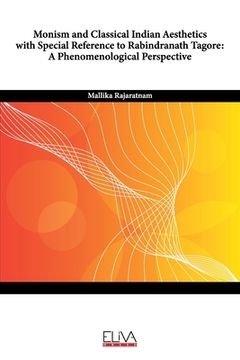
portada Monism and Classical Indian Aesthetics with Special Reference to Rabindranath Tagore: A Phenomenological Perspective
Type
Physical Book
Publisher
Language
English
Pages
68
Format
Paperback
Dimensions
22.9x15.2x0.4 cm
Weight
0.10 kg.
ISBN13
9781636480596
Categories

Monism and Classical Indian Aesthetics with Special Reference to Rabindranath Tagore: A Phenomenological Perspective

Mallika Rajaratnam (Author) · Eliva Press · Paperback

Monism and Classical Indian Aesthetics with Special Reference to Rabindranath Tagore: A Phenomenological Perspective - Rajaratnam, Mallika

New Book Imported to South Africa
Delivery: 23 Oct - 05 Nov Shipping: 16 to 20 business days.
R 879
R 879

Synopsis "Monism and Classical Indian Aesthetics with Special Reference to Rabindranath Tagore: A Phenomenological Perspective"

Rabindranath Tagore [1861- 1941] was a Universal Philosopher, poet, Novelist, Creative writer, music composer, painter, Educationist and a Scientist in a deeper sense. He explored universal classical Aesthetics through his versatile capacities. He was the first Asian to win the Nobel prize for literature- for his Gitanjali 1913. He was not only a poet, but also a great critic and he introduced deeper Asian values to the whole globe, while exploring the integration of classical values of Eastern and Western Traditions. One of the greatest sons of India, Rabindranath Tagore won the international admiration as Poet Philosopher and Creative writer he explored universal humanism and philosophy of universal aesthetics through his versatile genius. Each country contributes something essential to the world's civilization with their self-expression and India's contribution comes through her Universal Philosophy which has the uniqueness of oneness of all being and universal humanism. Tagore got his deeper meaning of universalism from the ancient Philosophical scriptures of India and the Philosophy of the Upanishads. In addition to this, he was influenced by many other sources such as Nature, Buddhism, Sufism, Christian Mysticism and the Classical Western Philosophy. Philosophy of the Upanishads and Indian Philosophy of Values and Aesthetics contributed extensively in shaping his Universal Humanism. This paper analyzes the integration of his Philosophy of Humanism and Aesthetics in his creative works as well as in his writings on Creative Unity, Towards Universal Man, Religion of Man, Personality, Religion of an Artist, Sahdana- the Realization of life etc... When a man touches this experience he becomes universal Man who transcends cast creed and nationality and he has no selfish end. Aesthetic expression, thus involves self-realization and since this is not individual fragmentary self, but the universal self. Tagore reconciles Absolutism and Theism, monism and pluralism idealism and realism in his unique philosophy of Aesthetics and the expression of Universal Humanism.

Customers reviews

Frequently Asked Questions about the Book

All books in our catalog are Original.
The book is written in English.
The binding of this edition is Paperback.

Questions and Answers about the Book

Do you have a question about the book? Login to be able to add your own question.

Opinions about Bookdelivery

More customer reviews