Tracked shipping to South Africa with premium packaging for just R199 

Ship to
South Africa
0
  • argentina
  • chile
  • colombia
  • españa
  • méxico
  • perú
  • estados unidos
  • internacional

Select your country

Americas

Europe

Rest of the world

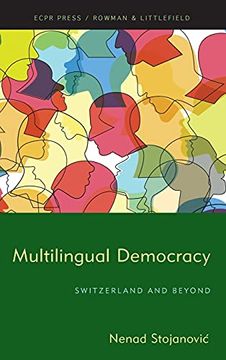
portada Multilingual Democracy: Switzerland and Beyond
Type
Physical Book
Publisher
Year
2021
Language
English
Pages
208
Format
Hardcover
ISBN13
9781785523311

Multilingual Democracy: Switzerland and Beyond

Nenad Stojanović (Author) · Ecpr Press · Hardcover

Multilingual Democracy: Switzerland and Beyond - Nenad Stojanović

New Book Imported to South Africa
Delivery: 24 Aug - 02 Sep Shipping: 4 to 5 business days.
R 2,226
R 2,226

Synopsis "Multilingual Democracy: Switzerland and Beyond "

Most experts on divided societies and institutional design broadly agree that it is more difficult to establish and maintain a stable, functioning democracy in a country with multiple languages and linguistically fragmented public spheres than in more homogeneous countries. Multilingual countries such as Canada and Belgium have been experiencing considerable difficulties in past decades (see the almost successful 1995 referendum on sovereignty in Quebec or the institutional deadlock and the rise of Flemish nationalism in Belgium since the 1970s). The challenge of multilingualism has been on the rise in the United States, too, considering an ever-increasing number of Spanish speakers who are not fluent in English and the emergence of Spanish-only media in some parts of the country. The prospects for the EU to become a viable democracy are even more haunted by multilingualism, considering that it has 24 official languages and no lingua franca. Switzerland, however, is also a multilingual country without a lingua franca, fragmented into 26 largely mono-lingual cantons and four linguistically distinct public spheres (German, French, Italian, Romansh). And yet it is widely seen as one of the most stable and successful democracies in the contemporary world. This book offers a different institutional explanation that accounts for the success of Swiss multilingual democracy. The author argues that in mainstream literature important Swiss institutions - in particular direct democracy, Parliament and the federal executive - have not been properly understood. They have been labelled as "consociational", whereas in reality they are a product of rival, centripetal institutional mechanisms.

Customers reviews

Frequently Asked Questions about the Book

All books in our catalog are Original.
The book is written in English.
The binding of this edition is Hardcover.

Questions and Answers about the Book

Do you have a question about the book? Login to be able to add your own question.

Opinions about Bookdelivery

More customer reviews