Tracked shipping to South Africa with premium packaging for just R199 

Ship to
South Africa
0
  • argentina
  • chile
  • colombia
  • españa
  • méxico
  • perú
  • estados unidos
  • internacional

Select your country

Americas

Europe

Rest of the world

portada Nicotinoid Insecticides and the Nicotinic Acetylcholine Receptor
Type
Physical Book
Publisher
Language
English
Pages
300
Format
Paperback
Dimensions
23.4x15.6x1.7 cm
Weight
0.44 kg.
ISBN13
9784431680116

Nicotinoid Insecticides and the Nicotinic Acetylcholine Receptor

Yamamoto, I. ; Casida, J. E. (Author) · Springer · Paperback

Nicotinoid Insecticides and the Nicotinic Acetylcholine Receptor - Yamamoto, I. ; Casida, J. E.

Cheaper New Book Imported to South Africa
Delivery: 15 Oct - 28 Oct Shipping: 12 to 16 business days.
R 3,334
Faster New Book Imported to South Africa
Delivery: 06 Oct - 14 Oct Shipping: 5 to 6 business days.
R 4,744
R 3,334

Synopsis "Nicotinoid Insecticides and the Nicotinic Acetylcholine Receptor"

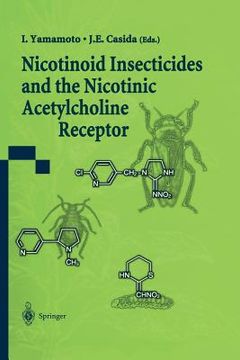
Insect pest control has continuously evolved from inorganics to botanicals, to chlo- rinated hydrocarbons, to organophosphorus compounds and methylcarbamates, then synthetic pyrethroids and most recently synthetic nicotinoids as the major classes. These insecticides allowed high standards of crop protection at minimal cost. A limitation in each new class of compounds is the selection of resistant strains and ultimate control failures and this serves as a driving force to discover and develop replacement compounds to circumvent resistance and overcome problem areas. The nicotinoids now play a critical role in meeting this need. Three generations of chemicals are involved in the history of nicotinoid insecti- cides. The first generation was the botanical nicotine used for at least three centuries to control sucking insect pests but largely replaced in the 1940s and 1950s by the more effective organophosphorus compounds and methylcarbamates, some with systemic properties. Synthesis programs based on nicotine as a prototype did not yield compounds that could compete with other synthetic insecticides. The second generation was the nitromethylene type such as nithiazine, discovered by Shell sci- entists in a screening/optimization program. The nitromethylenes had the potency, selectivity, and systemic properties but lacked the field effectiveness largely because of photolability (so close yet so far from a major commercial product). The third generation required a series of advances made by Bayer researchers starting from nithiazine as the model and enhancing its photostability and potency with a nitroimine and chloropyridyl moiety, respectively, to give imidacloprid, the subject of much of this monograph.

Customers reviews

Frequently Asked Questions about the Book

All books in our catalog are Original.
The book is written in English.
The binding of this edition is Paperback.

Questions and Answers about the Book

Do you have a question about the book? Login to be able to add your own question.

Opinions about Bookdelivery

More customer reviews