Tracked shipping to South Africa with premium packaging for just R199 

Ship to
South Africa
0
  • argentina
  • chile
  • colombia
  • españa
  • méxico
  • perú
  • estados unidos
  • internacional

Select your country

Americas

Europe

Rest of the world

portada Paths and Goals of the Spiritual Human Being: Life Questions in the Light of Spiritual Science (Cw 125)
Type
Physical Book
Introduction by
Translated by
Language
English
Pages
296
Format
Paperback
Dimensions
23.1 x 15.2 x 2.3 cm
Weight
0.45 kg.
ISBN13
9781855844216

Paths and Goals of the Spiritual Human Being: Life Questions in the Light of Spiritual Science (Cw 125)

Rudolf Steiner (Author) · Christian Von Arnim (Introduction by, Translated by) · Rudolf Steiner Press · Paperback

Paths and Goals of the Spiritual Human Being: Life Questions in the Light of Spiritual Science (Cw 125) - Steiner, Rudolf ; Von Arnim, Christian ; Von Arnim, Christian

New Book Imported to South Africa
Delivery: 10 Aug - 19 Aug Shipping: 6 to 8 business days.
R 459
R 459

Synopsis "Paths and Goals of the Spiritual Human Being: Life Questions in the Light of Spiritual Science (Cw 125)"

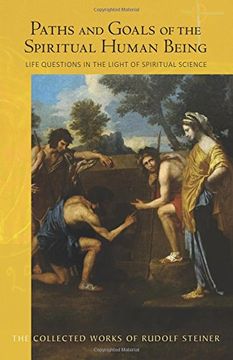
14 lectures, various cities, January 1 - December 27, 1910 (CW 125)Speaking to audiences in Denmark, Germany, and France, Rudolf Steiner discusses a wide range of topics--from positive and negative human soul capacities, true self-knowledge, and karma to changes in human consciousness; from ancient times to the modern era, all in the context of Christ's incarnation on Earth.These lectures illustrate the diversity of Steiner's approach when speaking to different audiences. Reflecting on the polymath Novalis, for example, he is urgent about the responsibility of Spiritual Science to help humanity awaken to the New Age. A few months later, speaking of Hegel and deploring the fact that an interest in spiritual matters often fails to be accompanied by an equal interest in logical thinking, Steiner uses a dispassionate, philosophical tone. Nevertheless, throughout these lectures, he is consistent in his view that Spiritual Science does not reject conventional science. Trained, philosophical thinking leads to conclusions that are different from those of materialists, he says; but there is nothing in the field of Spiritual Science that needs to be rejected by rigorous scientific thought.Although the lectures in this volume were given to a variety of audiences, ideas recur from different perspectives and in different contexts, with strong thematic links that hold them together. These include the relationship between philosophy and science; the nature of clairvoyance; Christ's presence in the etheric realm; reincarnation and karma; the mystery drama The Portal of Initiation; Christmas and its symbols; and the transformation of consciousness that occurred when Christ incarnated physically on Earth.In the final lectures, Steiner speaks inspiringly about the Christmas festival, such as the feeling of inwardness that people used to experience in contrast to the hectic cultural environment of modern cities. This, however, does not lead Steiner to nostalgia for the past; rather, he says that we should try to recreate a mood of innerness in a new way--one appropriate to our modern consciousness. These lectures offer tools to bring such a contemporary spiritual approach into our lives.This volume is a translation from German of Wege und Ziele des geistigen Menschen. Lebensfragen im Lichte der Geisteswissenschaft (GA 125). COVER IMAGE: Et in Arcadia ego (or The Arcadian Shepherds, c.1638); by Nicolas Poussin (1594-1665), oil on canvas, 34 x 47 inches, Musée du Louvre, France
Rudolf Steiner
  (Author)
View Author's Page
Rudolf Steiner (Donji Kraljevec, Austro-Hungarian Empire, now Croatia, February 25 or 27, 1861-Dornach, Switzerland, March 30, 1925) was an Austrian philosopher, literary scholar, educator, artist, playwright, social thinker, and occultist. He was the founder of anthroposophy, Waldorf education, biodynamic agriculture, anthroposophic medicine, and the new artistic form of eurythmy.

He described anthroposophy as follows: Anthroposophy is a path of knowledge that would like to lead the spiritual in man to the spiritual in the universe. Those who feel certain questions about the essence of man and the world as a vital necessity as the one felt when we are hungry and thirsty can be anthroposophists.

Steiner proposed a form of ethical individualism, to which he later added a more explicitly spiritual component. He derived his epistemology from the worldview of Johann Wolfgang Goethe, according to which thought is an organ of perception just like the eye or the ear. Just as the eye perceives colors and the ear sounds, so thought perceives ideas.
See more
See less

Customers reviews

Frequently Asked Questions about the Book

All books in our catalog are Original.
The book is written in English.
The binding of this edition is Paperback.

Questions and Answers about the Book

Do you have a question about the book? Login to be able to add your own question.

Opinions about Bookdelivery

More customer reviews