Tracked shipping to South Africa with premium packaging for just R199 

Ship to
South Africa
0
  • argentina
  • chile
  • colombia
  • españa
  • méxico
  • perú
  • estados unidos
  • internacional

Select your country

Americas

Europe

Rest of the world

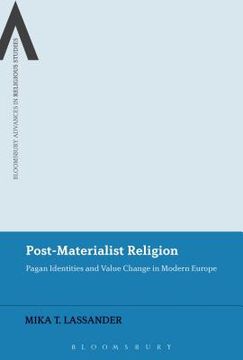
portada Post-Materialist Religion: Pagan Identities and Value Change in Modern Europe
Type
Physical Book
Language
English
Pages
224
Format
Hardcover
Dimensions
23.4x15.6x1.4 cm
Weight
0.49 kg.
ISBN13
9781472509925

Post-Materialist Religion: Pagan Identities and Value Change in Modern Europe

Mika T. Lassander (Author) · Bettina E. Schmidt (Illustrated by) · Steven Sutcliffe (Illustrated by) · Bloomsbury Academic · Hardcover

Post-Materialist Religion: Pagan Identities and Value Change in Modern Europe - Lassander, Mika T. ; Schmidt, Bettina E. ; Sutcliffe, Steven

New Book Imported to South Africa
Delivery: 03 Nov - 11 Nov Shipping: 5 to 6 business days.
R 3,749
R 3,749

Synopsis "Post-Materialist Religion: Pagan Identities and Value Change in Modern Europe"

Post-Materialist Religion discusses the transformations of the individual's worldview in contemporary modern societies, and the role general societal value change plays in these. In doing so, Mika Lassander brings into conversation sociological theories of secularisation and social-psychological theories of interpersonal relations, the development of morality, and the nature of basic human values. The long-term decline of traditional religiosity in Europe and the emerging ethos that can be described as post-secular have brought religion and values back into popular discussion. One important theme in these discussions is about the links between religion and values, with the most common assumption being that religions are the source of individuals' values. This book argues for the opposite view, suggesting that religions, or people's worldviews in general, reflect the individual's priorities. Mika Lassander argues that the transformation of the individual's worldview is a direct consequence of the social and economical changes in European societies since the Second World War. He suggests that the decline of traditional religiosity is not an indication of linear secularisation or of forgetting traditions, but an indication of the loss of relevance of some aspects of the traditional institutional religions. Furthermore, he argues that this is not an indication of the loss of ethical value base, but, rather, a change in the value base and consequently the transformation of the legitimating framework of this value base.

Customers reviews

Frequently Asked Questions about the Book

All books in our catalog are Original.
The book is written in English.
The binding of this edition is Hardcover.

Questions and Answers about the Book

Do you have a question about the book? Login to be able to add your own question.

Opinions about Bookdelivery

More customer reviews