Tracked shipping to South Africa with premium packaging for just R199 

Ship to
South Africa
0
  • argentina
  • chile
  • colombia
  • españa
  • méxico
  • perú
  • estados unidos
  • internacional

Select your country

Americas

Europe

Rest of the world

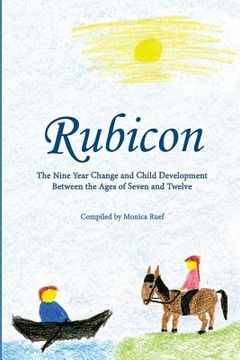
portada Rubicon: Developmental Steps age 7 – 10; Selections From the Work of Rudolf Steiner: Selections From the Works of Rudolf Steiner
Type
Physical Book
Translated by
Year
2015
Language
English
Pages
188
Format
Paperback
Dimensions
22.9x15.2x1.1 cm
Weight
0.28 kg.
ISBN13
9781936367672
Edition No.
1

Rubicon: Developmental Steps age 7 – 10; Selections From the Work of Rudolf Steiner: Selections From the Works of Rudolf Steiner

Rudolf Steiner (Author) · Monica Ruef (Author) · Nina Kuettel (Translated by) · Waldorf Publications · Paperback

Rubicon: Developmental Steps age 7 – 10; Selections From the Work of Rudolf Steiner: Selections From the Works of Rudolf Steiner - Ruef, Monica ; Kuettel, Nina ; Steiner, Rudolf

New Book Imported to South Africa
Delivery: 07 Oct - 16 Oct Shipping: 6 to 8 business days.
R 348
R 348

Synopsis "Rubicon: Developmental Steps age 7 – 10; Selections From the Work of Rudolf Steiner: Selections From the Works of Rudolf Steiner "

This book offers considerable help to both teachers and parents in supporting children at crisis moments in their development. Clues as to what is appropriate as the child wrestles with leaps in growth and consciousness that are demanding and exhilarating.Monica Ruef has compiled a comprehensive collection of what Rudolf Steiner has said and written about the nine year change and the three important ages of childhood: age 7, age 9, and age 12.Rudolf Steiner (1861 to 1925, Austrian) introduced and explained a unique and effective way to view child development, in seven-year cycles. Within the second seven years, ages 7 to 14, three significant "Rubicons" must be crossed: age 7, when a child loses milk teeth and grows adult teeth, with a first change of consciousness; age 9, when many children learn that there is no Santa Claus nor tooth fairy, and begin to feel their own competence and aloneness; and age 12 when puberty begins and the capacity for judgement and clear thinking are born. These "Rubicons" children must cross for healthful growth and maximization of capacities require from parents and teachers alike a gentle attentiveness to be handled well. Each child is different but the symptoms tend to be the same at each important threshold the child faces at these ages.This view of these significant changes in children is helpful and supportive for each child to feel increasing independence, social skill, and a sense of responsibility to others. To ignore these important steps and "crises" in consciousness each child must take is to risk incomplete development with lifelong issues of dependence. Freedom is the goal of every youngster: an ability to understand strengths and weaknesses and the gifts of every human being give each individual tools necessary for a happy, clear-thinking, and purposeful life.This book will illuminate in a new way, support and structure at critical points in a child's growing up.For every parent, guardian, or teacher responsible for children, this is a book that will carry rich rewards for new ideas in correct relationships from adults as important architectural supports for a growing child.
Rudolf Steiner
  (Author)
View Author's Page
Rudolf Steiner (Donji Kraljevec, Austro-Hungarian Empire, now Croatia, February 25 or 27, 1861-Dornach, Switzerland, March 30, 1925) was an Austrian philosopher, literary scholar, educator, artist, playwright, social thinker, and occultist. He was the founder of anthroposophy, Waldorf education, biodynamic agriculture, anthroposophic medicine, and the new artistic form of eurythmy.

He described anthroposophy as follows: Anthroposophy is a path of knowledge that would like to lead the spiritual in man to the spiritual in the universe. Those who feel certain questions about the essence of man and the world as a vital necessity as the one felt when we are hungry and thirsty can be anthroposophists.

Steiner proposed a form of ethical individualism, to which he later added a more explicitly spiritual component. He derived his epistemology from the worldview of Johann Wolfgang Goethe, according to which thought is an organ of perception just like the eye or the ear. Just as the eye perceives colors and the ear sounds, so thought perceives ideas.
See more
See less

Customers reviews

Frequently Asked Questions about the Book

All books in our catalog are Original.
The book is written in English.
The binding of this edition is Paperback.

Questions and Answers about the Book

Do you have a question about the book? Login to be able to add your own question.

Opinions about Bookdelivery

More customer reviews