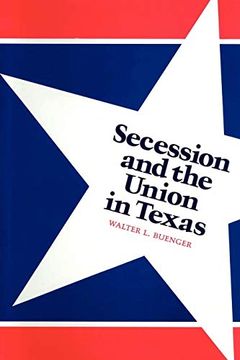
In 1845 Texans voted overwhelmingly to join the Union. They voted just as overwhelmingly to secede in 1861. The story of why and how that happened is filled with colorful characters, such as the aged Sam Houston, and with the southwestern flavor of raiding Comanches, German opponents of slavery, and a border with Mexico.Texas was unique among the seceding states because of its ambivalence toward secession. Yet for all its uniqueness the story of the secession of Texas has broad implications for the secession movement in general. Despite the local color and the southwestern nature of the state, Texas was more southern than western in 1860. Texans supported the Union or insisted upon secession for reasons common to the South and to the whole nation. Most Texans in 1860 were recent immigrants from southern and border states. They still thought and acted like citizens of their former states. The newness of Texas then makes it a particularly appropriate place from which to draw conclusions about the entire secession movement. Secession and the Union in Texas is both a narrative of secession in Texas and a case study of the causes of secession in a southern state. Politics play a key role in this history, but politics broadly defined to include the influence of culture, partisanship, ideology, and self-interest. As any study of a mass movement carried out in tense circumstances must be, this is social history as well as political history. It is a study of public hysteria, the pressure for consensus, and the vanishing of a political process in which rational debate about secession and the Union could take place.Although relying primarily on traditional sources such as manuscript collections and newspapers, a particularly rich source for this study, the author also uses election returns, population shifts over the course of the 1850s, and the breakdown of population within Texas counties to provide a balanced approach.These sources indicate that Texans were not simply secessionists or unionists. At the end of 1860 Texans ranged from ardent secessionists to equally passionate supporters of the Union. But the majority fell in between these two extremes, creating an atmosphere of ambivalence toward secession which was not erased even by the war.