Tracked shipping to South Africa with premium packaging for just R199 

Ship to
South Africa
0
  • argentina
  • chile
  • colombia
  • españa
  • méxico
  • perú
  • estados unidos
  • internacional

Select your country

Americas

Europe

Rest of the world

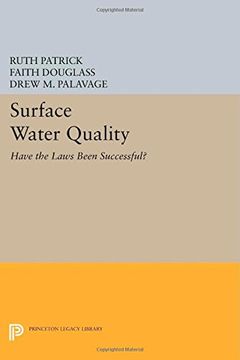
portada Surface Water Quality: Have the Laws Been Successful? (Princeton Legacy Library)
Type
Physical Book
Year
2014
Language
English
Pages
218
Format
Paperback
ISBN13
9780691601830

Surface Water Quality: Have the Laws Been Successful? (Princeton Legacy Library)

Ruth Patrick; Faith Douglass; Drew M. Palavage; Paul M. Stewart (Author) · Princeton University Press · Paperback

Surface Water Quality: Have the Laws Been Successful? (Princeton Legacy Library) - Ruth Patrick; Faith Douglass; Drew M. Palavage; Paul M. Stewart

Cheaper New Book Imported to South Africa
Delivery: 03 Sep - 16 Sep Shipping: 12 to 16 business days.
R 986
Faster New Book Imported to South Africa
Delivery: 07 Sep - 15 Sep Shipping: 14 to 15 business days.
R 1,239
R 986

Synopsis "Surface Water Quality: Have the Laws Been Successful? (Princeton Legacy Library) "

Addressing ecologists, legislators, lawyers, and industrialists alike, Ruth Patrick asks what has been accomplished with the millions of dollars spent on upgrading our surface waters. Has the water improved in spite of the fact that the crayfish, snails, and algae are not those that one would expect to find in natural rivers and estuaries? To evaluate the success of environmental laws over the past two decades, the author examines the aquatic life of river systems in the Delaware Valley, Texas, and Georgia--the only areas in the United States where she found enough biological data to determine trends over time. Although tracing the impact of environmental laws is difficult, Patrick found that for these three water systems the results were generally positive. However, if society as a whole wants effective environmental legislation, organizations must take on a more systematic and orderly approach to data gathering. Patrick argues that in monitoring the waters, one must study protozoa, algae, and worms as well as fish, oysters, and shrimp; one must track amounts of metal as well as low concentrations of oxygen. In proposing options for the future, the author predicts that the cost of such monitoring will be higher than present expenditures, but the cost of lax control will be even greater.Originally published in 1992.The Princeton Legacy Library uses the latest print-on-demand technology to again make available previously out-of-print books from the distinguished backlist of Princeton University Press. These editions preserve the original texts of these important books while presenting them in durable paperback and hardcover editions. The goal of the Princeton Legacy Library is to vastly increase access to the rich scholarly heritage found in the thousands of books published by Princeton University Press since its founding in 1905.

Customers reviews

Frequently Asked Questions about the Book

All books in our catalog are Original.
The book is written in English.
The binding of this edition is Paperback.

Questions and Answers about the Book

Do you have a question about the book? Login to be able to add your own question.

Opinions about Bookdelivery

More customer reviews