Tracked shipping to South Africa with premium packaging for just R199 

Ship to
South Africa
0
  • argentina
  • chile
  • colombia
  • españa
  • méxico
  • perú
  • estados unidos
  • internacional

Select your country

Americas

Europe

Rest of the world

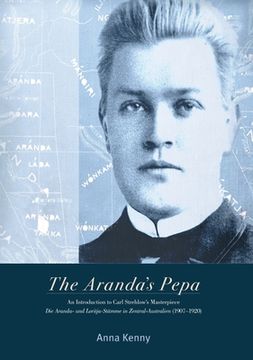
portada The Aranda's Pepa: An introduction to Carl Strehlow's Masterpiece Die Aranda- und Loritja-Stämme in Zentral-Australien (1907-1920)
Type
Physical Book
Publisher
Language
English
Pages
332
Format
Paperback
Dimensions
25.0 x 17.6 x 2.3 cm
Weight
0.76 kg.
ISBN13
9781921536762

The Aranda's Pepa: An introduction to Carl Strehlow's Masterpiece Die Aranda- und Loritja-Stämme in Zentral-Australien (1907-1920)

Anna Kenny (Author) · Anu Press · Paperback

The Aranda's Pepa: An introduction to Carl Strehlow's Masterpiece Die Aranda- und Loritja-Stämme in Zentral-Australien (1907-1920) - Kenny, Anna

New Book Imported to South Africa
Delivery: 21 Aug - 01 Sep Shipping: 4 to 5 business days.
R 587
R 587

Synopsis "The Aranda's Pepa: An introduction to Carl Strehlow's Masterpiece Die Aranda- und Loritja-Stämme in Zentral-Australien (1907-1920)"

The German missionary Carl Strehlow (1871-1922) had a deep ethnographic interest in Aboriginal Australian cosmology and social life which he documented in his 7 volume work Die Aranda- und Loritja-Stämme in Zentral-Australien that remains unpublished in English. In 1913, Marcel Mauss called his collection of sacred songs and myths, an Australian Rig Veda. This immensely rich corpus, based on a lifetime on the central Australian frontier, is barely known in the English-speaking world and is the last great body of early Australian ethnography that has not yet been built into the world of Australian anthropology and its intellectual history. The German psychological and hermeneutic traditions of anthropology that developed outside of a British-Australian intellectual world were alternatives to 19th century British scientism. The intellectual roots of early German anthropology reached back to Johann Gottfried Herder (1744-1803), the founder of German historical particularism, who rejected the concept of race as well as the French dogma of the uniform development of civilisation. Instead he recognised unique sets of values transmitted through history and maintained that cultures had to be viewed in terms of their own development and purpose. Thus, humanity was made up of a great diversity of ways of life, language being one of its main manifestations. It is this tradition that led to a concept of cultures in the plural.

Customers reviews

Frequently Asked Questions about the Book

All books in our catalog are Original.
The book is written in English.
The binding of this edition is Paperback.

Questions and Answers about the Book

Do you have a question about the book? Login to be able to add your own question.

Opinions about Bookdelivery

More customer reviews