Tracked shipping to South Africa with premium packaging for just R199 

Ship to
South Africa
0
  • argentina
  • chile
  • colombia
  • españa
  • méxico
  • perú
  • estados unidos
  • internacional

Select your country

Americas

Europe

Rest of the world

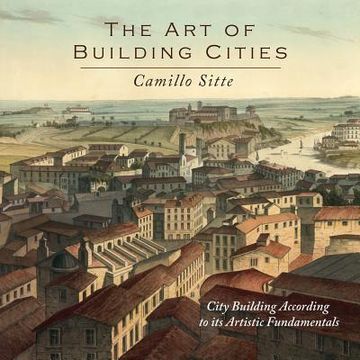
portada The Art of Building Cities: City Building According to Its Artistic Fundamentals
Type
Physical Book
Translated by
Language
English
Pages
146
Format
Paperback
Dimensions
20.3x20.3x0.8 cm
Weight
0.24 kg.
ISBN13
9781614275244

The Art of Building Cities: City Building According to Its Artistic Fundamentals

Camillo Sitte (Author) · Charles T. Stewart (Translated by) · Martino Fine Books · Paperback

The Art of Building Cities: City Building According to Its Artistic Fundamentals - Sitte, Camillo ; Stewart, Charles T.

Cheaper New Book Imported to South Africa
Delivery: 21 Oct - 03 Nov Shipping: 16 to 20 business days.
R 428
Faster New Book Imported to South Africa
Delivery: 16 Oct - 26 Oct Shipping: 13 to 14 business days.
R 599
R 428

Synopsis "The Art of Building Cities: City Building According to Its Artistic Fundamentals"

2013 Reprint of 1945 Edition. Full facsimile of the original edition, not reproduced with Optical Recognition Software. Camillo Sitte (1843-1903) was a noted Austrian architect, painter and theoretician who exercised great influence on the development of urban planning in Europe and the United States. The publication at Vienna in May 1889 of "Der Stadtebau nach seinen künstlerischen Grundsatzen" ("The Art of Building Cities") began a new era in Germanic city planning. Sitte strongly criticized the current emphasis on broad, straight boulevards, public squares arranged primarily for the convenience of traffic, and efforts to strip major public or religious landmarks of adjoining smaller structures regarded as encumbering such monuments of the past. Sitte proposed instead to follow what he believed to be the design objectives of those whose streets and buildings shaped medieval cities. He advocated curving or irregular street alignments to provide ever-changing vistas. He called for T-intersections to reduce the number of possible conflicts among streams of moving traffic. He pointed out the advantages of what came to be know as "turbine squares"--civic spaces served by streets entering in such a way as to resemble a pin-wheel in plan. His teachings became widely accepted in Austria, Germany, and Scandinavia, and in less than a decade his style of urban design came to be accepted as the norm in those countries.

Customers reviews

Frequently Asked Questions about the Book

All books in our catalog are Original.
The book is written in English.
The binding of this edition is Paperback.

Questions and Answers about the Book

Do you have a question about the book? Login to be able to add your own question.

Opinions about Bookdelivery

More customer reviews