Tracked shipping to South Africa with premium packaging for just R199 

Ship to
South Africa
0
  • argentina
  • chile
  • colombia
  • españa
  • méxico
  • perú
  • estados unidos
  • internacional

Select your country

Americas

Europe

Rest of the world

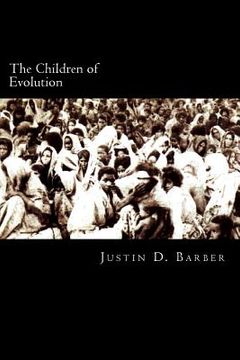
portada The Children of Evolution: Euclides Da Cunha and Positivist Discourse in Late Nineteenth-Century Brazil
Type
Physical Book
Publisher
Language
English
Pages
128
Format
Paperback
Dimensions
22.9 x 15.2 x 0.7 cm
Weight
0.18 kg.
ISBN13
9781470183257

The Children of Evolution: Euclides Da Cunha and Positivist Discourse in Late Nineteenth-Century Brazil

Justin D. Barber (Author) · Createspace · Paperback

The Children of Evolution: Euclides Da Cunha and Positivist Discourse in Late Nineteenth-Century Brazil - Barber, Justin D.

New Book Imported to South Africa
Delivery: 21 Aug - 04 Sep Shipping: 16 to 20 business days.
R 306
R 306

Synopsis "The Children of Evolution: Euclides Da Cunha and Positivist Discourse in Late Nineteenth-Century Brazil"

Founded in 1889, the Republic of the United States of Brazil was constructed as a positivist state by republican idealists and pragmatic oligarchs; the political embodiment of ordem e progresso (order and progress). It was a form of government meant to overcome Brazil's imagined and concrete backwardness by strictly adhering to the Natural Laws identified by Auguste Comte, Charles Darwin, and, in particular, Herbert Spencer. Spencerian "progress," however, entailed the elimination of the pathological and monstrous "savage lower races." Non-white degeneration in Brazil, especially amongst its substantial mixed-race populace, was thus understood to be a progressive and advantageous force of Evolution. For close to a century Euclides da Cunha's Os Sertões (known to English readers as Rebellion in the Backlands) has been treated as the literary touchstone of mestiço degeneration. It is a work of monumental importance, despite that it is typically classified with the Spencerian "race science" of Arthur Gobineau and Raimundo Nina Rodrigues. In this work, independent scholar Justin Barber demonstrates that this classification is incorrect, detailing the relationship of Da Cunha's determinism to that of Comte, Darwin, Spencer, and other important unified theorists such as Henry Thomas Buckle and Ludwig Gumplowicz. Overturning nearly a century of scholarship, Barber precisely details how Da Cunha's work incarnates the totality of Brazilian progress-progress utterly superior to that of European civilization-in the body of his Children of Evolution. For Da Cunha, these chimerical jagunços (bandits) embodied a perfectly miscegenated balance of Brazil's fundamental "ethnic elements" the African, the indigenous, and the Portuguese.

Customers reviews

Frequently Asked Questions about the Book

All books in our catalog are Original.
The book is written in English.
The binding of this edition is Paperback.

Questions and Answers about the Book

Do you have a question about the book? Login to be able to add your own question.

Opinions about Bookdelivery

More customer reviews