Tracked shipping to South Africa with premium packaging for just R199 

Ship to
South Africa
0
  • argentina
  • chile
  • colombia
  • españa
  • méxico
  • perú
  • estados unidos
  • internacional

Select your country

Americas

Europe

Rest of the world

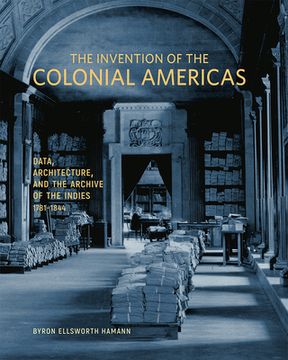
portada The Invention of the Colonial Americas: Data, Architecture, and the Archive of the Indies, 1781-1844
Type
Physical Book
Language
English
Pages
328
Format
Hardcover
Dimensions
25.9x20.8x3 cm
Weight
1.29 kg.
ISBN13
9781606067734

The Invention of the Colonial Americas: Data, Architecture, and the Archive of the Indies, 1781-1844

Byron Ellsworth Hamann (Author) · Getty Research Institute · Hardcover

The Invention of the Colonial Americas: Data, Architecture, and the Archive of the Indies, 1781-1844 - Hamann, Byron Ellsworth

New Book Imported to South Africa
Delivery: 30 Sep - 08 Oct Shipping: 1 to 2 business days.
R 1,126
R 1,126

Synopsis "The Invention of the Colonial Americas: Data, Architecture, and the Archive of the Indies, 1781-1844"

The story of Seville's Archive of the Indies reveals how current views of the sixteenth and seventeenth centuries are based on radical historical revisionism in Spain in the late 1700s. The Invention of the Colonial Americas is an architectural history and media-archaeological study of changing theories and practices of government archives in Enlightenment Spain. It centers on an archive created in Seville for storing Spain's pre-1760 documents about the New World. To fill this new archive, older archives elsewhere in Spain--spaces in which records about American history were stored together with records about European history--were dismembered. The Archive of the Indies thus constructed a scholarly apparatus that made it easier to imagine the history of the Americas as independent from the history of Europe, and vice versa. In this meticulously researched book, Byron Ellsworth Hamann explores how building layouts, systems of storage, and the arrangement of documents were designed to foster the creation of new knowledge. He draws on a rich collection of eighteenth-century architectural plans, descriptions, models, document catalogs, and surviving buildings to present a literal, materially precise account of archives as assemblages of spaces, humans, and data--assemblages that were understood circa 1800 as capable of actively generating scholarly innovation.

Customers reviews

Frequently Asked Questions about the Book

All books in our catalog are Original.
The book is written in English.
The binding of this edition is Hardcover.

Questions and Answers about the Book

Do you have a question about the book? Login to be able to add your own question.

Opinions about Bookdelivery

More customer reviews