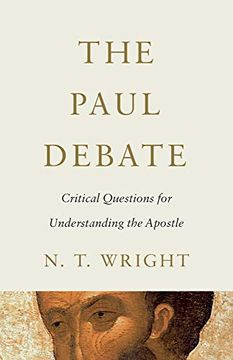
The Paul Debate: Critical Questions for Understanding the Apostle
N. T. Wright
Synopsis "The Paul Debate: Critical Questions for Understanding the Apostle "
In the last two decades N. T. Wright has produced a succession of connected volumes that explore the nature and origins of Christianity. Wright has consistently argued that Christianity, while indebted to Second Temple Judaism, represents an explosive new development. With major books on method and background, Jesus, and the resurrection already in print, in Paul and the Faithfulness of God , Wright added a comprehensive study of the Apostle to the Gentiles. Wright's Paul , as well as his reading of Christianity, is not without its detractors. In The Paul Debate , Wright answers his critics. The five chapters represent a response to the five most questioned elements of his understanding of Paul. The first chapter takes up the question of Paul's theological coherence, particularly the way in which his Jewish context, and the story about Israel he inherited, interacted with what he came to believe about Jesus, a Christological story. Chapter two follows on by tackling the debate over the background, origin, and implications of Paul's Christology. The third chapter addresses the questions of covenant and cosmos, narrative and apocalyptic. Chapter four focuses on the debate over Paul's view of who constitutes the people of God; this chapter also addresses the question of whether justification belongs to Paul's soteriology or his ecclesiology, or somehow to both. The final chapter then traces debates about method, both Paul's and ours, as well as questions of discovery and presentation, again, both Paul's and ours. The Paul Debate is essential reading for those who both agree and disagree with Wright, and for all who want to understand the compelling voice of one of the most productive and widely read scholars in past decades.
N. T. Wright, cuyo nombre completo es Nicholas Thomas Wright, es un destacado teólogo, historiador y obispo anglicano británico nacido el 1 de diciembre de 1948 en Morpeth. Es reconocido mundialmente por sus estudios sobre el Nuevo Testamento y la figura histórica de Jesús, así como por su contribución a la teología cristiana contemporánea.
Wright estudió en la Universidad de Oxford, donde se especializó en clásicos y teología. A lo largo de su carrera, ha ocupado importantes cargos académicos y eclesiásticos, incluyendo el de obispo de Durham entre 2003 y 2010 dentro de la Iglesia de Inglaterra. Posteriormente, se desempeñó como profesor de Nuevo Testamento y Cristianismo primitivo en la Universidad de St Andrews, en Escocia.
Su obra académica es extensa y accesible tanto para especialistas como para el público general. Entre sus libros más influyentes se encuentran Simply Christian, Surprised by Hope y su serie sobre los orígenes cristianos. Wright es una figura clave en el debate sobre la “Nueva Perspectiva sobre Pablo”, corriente dentro de la teología bíblica.
Además de su labor académica, es un prolífico conferencista y divulgador, conocido por su habilidad para explicar conceptos complejos de forma clara. Su trabajo ha influido significativamente en la comprensión moderna del cristianismo primitivo.