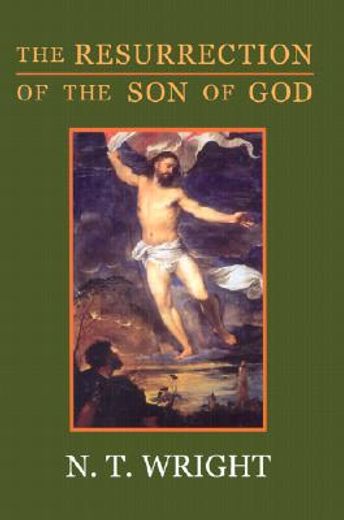
Why did Christianity begin, and why did it take the shape it did? To answer this question - which any historian must face - renowned New Testament scholar N. T. Wright focuses on the key question: what precisely happened at Easter? What did the early Christians mean when they said that Jesus of Nazareth had been raised from the dead? What can be said today about this belief? This book, third in Wright's series Christian Origins and the Question of God, sketches a map of ancient beliefs about life after death, in both the Greco-Roman and Jewish worlds. It then highlights the fact that the early Christians' belief about the afterlife belonged firmly on the Jewish spectrum, while introducing several new mutations and sharper definitions. This, together with other features of early Christianity, forces the historian to read the Easter narratives in the gospels, not simply as late rationalizations of early Christian spirituality, but as accounts of two actual events: the empty tomb of Jesus and his appearances. How do we explain these phenomena? The early Christians' answer was that Jesus had indeed been bodily raised from the dead; that was why they hailed him as the messianic son of God. No modern historian has come up with a more convincing explanation. Facing this question, we are confronted to this day with the most central issues of worldview and theology.
N. T. Wright, cuyo nombre completo es Nicholas Thomas Wright, es un destacado teólogo, historiador y obispo anglicano británico nacido el 1 de diciembre de 1948 en Morpeth. Es reconocido mundialmente por sus estudios sobre el Nuevo Testamento y la figura histórica de Jesús, así como por su contribución a la teología cristiana contemporánea.
Wright estudió en la Universidad de Oxford, donde se especializó en clásicos y teología. A lo largo de su carrera, ha ocupado importantes cargos académicos y eclesiásticos, incluyendo el de obispo de Durham entre 2003 y 2010 dentro de la Iglesia de Inglaterra. Posteriormente, se desempeñó como profesor de Nuevo Testamento y Cristianismo primitivo en la Universidad de St Andrews, en Escocia.
Su obra académica es extensa y accesible tanto para especialistas como para el público general. Entre sus libros más influyentes se encuentran Simply Christian, Surprised by Hope y su serie sobre los orígenes cristianos. Wright es una figura clave en el debate sobre la “Nueva Perspectiva sobre Pablo”, corriente dentro de la teología bíblica.
Además de su labor académica, es un prolífico conferencista y divulgador, conocido por su habilidad para explicar conceptos complejos de forma clara. Su trabajo ha influido significativamente en la comprensión moderna del cristianismo primitivo.