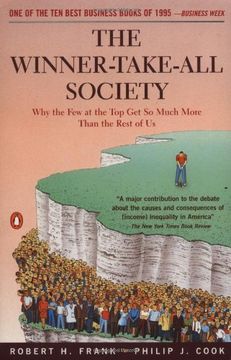
The Winner-Take-All Society: Why the few at the top get so Much More Than the Rest of us
Robert Frank
Synopsis "The Winner-Take-All Society: Why the few at the top get so Much More Than the Rest of us "
Disney chairman Michael Eisner topped the 1993 Business Week chart of America's highest-paid executives, his $203 million in earnings roughly 10,000 times that of the lowest paid Disney employee.During the last two decades, the top one percent of U.S. earners captured more than 40 percent of the country's total earnings growth, one of the largest shifts any society has endured without a revolution or military defeat. Robert H. Frank and Philip J. Cook argue that behind this shift lies the spread of winner-take-all markets--markets in which small differences in performance give rise to enormous differences in reward. Long familiar in sports and entertainment, this payoff pattern has increasingly permeated law, finance, fashion, publishing, and other fields. The result: in addition to the growing gap between rich and poor, we see important professions like teaching and engineering in aching need of more talent. This relentless emphasis on coming out on top--the best-selling book, the blockbuster film, the Super Bowl winner--has molded our discourse in ways that many find deeply troubling.
Robert Frank fue un fotógrafo y cineasta suizo-estadounidense considerado una de las figuras más influyentes de la fotografía documental del siglo XX. Nacido en Zúrich en 1924, emigró a Estados Unidos después de la Segunda Guerra Mundial y desarrolló una mirada profundamente personal sobre la sociedad norteamericana. Su trabajo rompió con la fotografía documental clásica mediante imágenes espontáneas, encuadres imperfectos y una sensibilidad melancólica que capturaba desigualdad, soledad y contradicciones culturales. Frank observaba Estados Unidos como alguien fascinado y desconcertado al mismo tiempo, algo que terminó convirtiendo sus fotografías en un retrato mucho más honesto que cómodo. Digamos que no vino a fotografiar postales turísticas precisamente.
Su obra más célebre es The Americans, publicada originalmente en 1958, un fotolibro revolucionario compuesto por imágenes tomadas durante viajes por distintos estados norteamericanos gracias a una beca Guggenheim. El libro, inicialmente criticado por mostrar una visión áspera y poco idealizada del país, terminó transformándose en una referencia absoluta para generaciones de fotógrafos y artistas visuales. Frank también dirigió películas experimentales y documentales, explorando temas relacionados con identidad, memoria y contracultura, siempre desde una estética libre y profundamente autobiográfica.