Tracked shipping to South Africa with premium packaging for just R199 

Ship to
South Africa
0
  • argentina
  • chile
  • colombia
  • españa
  • méxico
  • perú
  • estados unidos
  • internacional

Select your country

Americas

Europe

Rest of the world

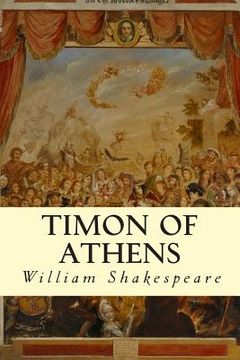
portada Timon of Athens
Type
Physical Book
Publisher
Language
English
Pages
92
Format
Paperback
Dimensions
22.9x15.2x0.5 cm
Weight
0.14 kg.
ISBN13
9781500487430

Timon of Athens

William Shakespeare (Author) · Createspace · Paperback

Timon of Athens - William Shakespeare

New Book Imported to South Africa
Delivery: 07 Oct - 20 Oct Shipping: 16 to 20 business days.
R 280
R 280

Synopsis "Timon of Athens"

Timon of Athens is a William Shakespeare play about the fortunes of an Athenian named Timon generally regarded as one of his most obscure and difficult works. Originally grouped with the tragedies, it is generally considered one, but some scholars group it with the problem plays. In the beginning, Timon is a wealthy and generous Athenian gentleman. He hosts a large banquet, attended by nearly all the main characters. Timon gives away money wastefully, and everyone wants to please him to get more, except for Apemantus, a churlish philosopher whose cynicism Timon cannot yet appreciate. He accepts art from Poet and Painter, and a jewel from the Jeweller, but by the end of Act 1, he has given that away to another friend. Timon's servant, Lucilius, has been wooing the daughter of an old Athenian. The man is angry, but Timon pays him three talents in exchange for the couple being allowed to marry, because the happiness of his servant is worth the price. Timon is told that his friend, Ventidius, is in debtors' prison. He sends money to pay Ventidius's debt, and Ventidius is released and joins the banquet. Timon gives a speech on the value of friendship. The guests are entertained by a masque, followed by dancing. As the party winds down, Timon continues to give things away to his friends; his horses, and other possessions. The act is divided rather arbitrarily into two scenes but the experimental and/or unfinished nature of the play is reflected in that it does not naturally break into a five-act structure. Now Timon has given away all his wealth. Flavius, Timon's steward, is upset by the way Timon has spent his wealth, overextending his munificence by showering patronage on the parasitic writers and artists, and delivering his dubious friends from their financial straits; this he tells Timon when he returns from a hunt. Timon is upset that he has not been told this before, and begins to vent his anger on Flavius, who tells him that he has tried repeatedly in the past without success, and now he is at the end; Timon's land has been sold. Shadowing Timon is another guest at the banquet: the cynical philosopher Apemantus, who terrorises Timon's shallow companions with his caustic raillery. He was the only guest not angling for money or possessions from Timon. Along with a Fool, he attacks Timon's creditors when they show up to make their demands for immediate payment. Timon cannot pay, and sends out his servants to make requests for help from those friends he considers closest. Timon's servants are turned down, one by one, by Timon's false friends, two giving lengthy monologues as to their anger with them. Elsewhere, one of Alcibiades's junior officers has reached an even further point of rage, killing a man in "hot blood." Alcibiades pleads with the Senate for mercy, arguing that a crime of passion should not carry as severe a sentence as premeditated murder. The senators disagree, and, when Alcibiades persists, banish him forever. He vows revenge, with the support of his troops. The act finishes with Timon discussing with his servants the revenge he will carry out at his next banquet. Timon hosts a smaller party, intended only for those he feels have betrayed him. The serving trays are brought in, but under them the friends find rocks and lukewarm water. Timon sprays them with the water, throws the dishes at them, and flees his home. The loyal Flavius vows to find him. Timon renounces society (1803 engraving for Shakespeare, Timon of Athens, Act IV, Scene 1) Cursing the city walls, Timon goes into the wilderness and makes his crude home in a cave, sustaining himself on roots. Here he discovers an underground trove of gold. The knowledge of his discovery spreads. Alcibiades, Apemantus, and three bandits are able to find Timon before Flavius does. Accompanying Alcibiades are two prostitutes, Phrynia and Timandra, who trade barbs with the bitter Timon on the subject of venereal disease.
William Shakespeare
  (Author)
View Author's Page
William Shakespeare (Stratford-upon-Avon, c. April 23, 1564jul. - Ibid., April 23/May 3, 1616) was an English playwright, poet, and actor. Often known as the Bard of Avon (or simply the Bard), he is considered the most important writer in the English language and one of the most famous in world literature.

According to the Encyclopædia Britannica, "Shakespeare is generally acknowledged as the greatest of all time writers, a unique figure in the history of literature. The fame of other poets, such as Homer and Dante Alighieri, or novelists such as Leo Tolstoy or Charles Dickens, has transcended national barriers, but none has achieved the reputation of Shakespeare, whose works today are read and performed more frequently and in more countries than ever. The prophecy of one of his great contemporaries, Ben Jonson, has thus been fulfilled: 'Shakespeare does not belong to one age but to eternity'".

Among his most notable works are Hamlet, Romeo and Juliet, Macbeth, and A Midsummer Night's Dream. His ability to portray the complexities of human nature, along with his mastery in the use of verse and language, has made him a timeless figure.
See more
See less

Customers reviews

Frequently Asked Questions about the Book

All books in our catalog are Original.
The book is written in English.
The binding of this edition is Paperback.

Questions and Answers about the Book

Do you have a question about the book? Login to be able to add your own question.

Opinions about Bookdelivery

More customer reviews