Tracked shipping to South Africa with premium packaging for just R199 

Ship to
South Africa
0
  • argentina
  • chile
  • colombia
  • españa
  • méxico
  • perú
  • estados unidos
  • internacional

Select your country

Americas

Europe

Rest of the world

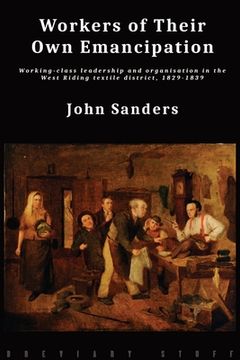
portada Workers of Their Own Emancipation: Working-class leadership and organisation in the West Riding textile district, 1829-1839
Type
Physical Book
Language
English
Pages
554
Format
Paperback
Dimensions
23.4x15.6x3.1 cm
Weight
0.84 kg.
ISBN13
9781916158672

Workers of Their Own Emancipation: Working-class leadership and organisation in the West Riding textile district, 1829-1839

John Sanders (Author) · Breviary Stuff Publications · Paperback

Workers of Their Own Emancipation: Working-class leadership and organisation in the West Riding textile district, 1829-1839 - Sanders, John

New Book Imported to South Africa
Delivery: 02 Dec - 08 Dec Shipping: 5 to 6 business days.
R 648
R 648

Synopsis "Workers of Their Own Emancipation: Working-class leadership and organisation in the West Riding textile district, 1829-1839"

This book traces the complex pattern of working-class radical endeavour in the West Riding textile district during the years from 1829 to 1839. It focuses in particular on questions of local leadership and organisation and stresses the importance of these elements to early working-class movements. The study assesses the significance of the trade union, popular radical, early co-operative and factory reform agitations of the late 1820s and early 1830s in shaping leadership cadres and organisational structures. It goes on to map out the varied, often mutually reinforcing campaigns of the mid 1830s which came together in the early Chartist movement. Chartism, with its more confident, experienced and self-reliant local leadership and its stress on organisation, is shown to be the culmination of a decade of escalating conflict and prodigious activity. It drew on the radicalising experiences of the early 1830s, on the incremental growth of working-class disillusionment in the post-Reform era, and on the common experiences and uncertainties which large sections of the local working population shared. Whilst building on traditional ideas and agitational tactics, the early Chartists increasingly articulated an assertive, class-conscious alternative to the widely-perceived evils of unregulated competitive industry and unrepresentative, uncaring government. Far from being peripheral figures, the local leaders who emerged in this era were central to the story of the emergence of the world's first mass working-class movement. For this reason, the efforts of contemporaries to perpetuate their memory deserve to be continued, so that a few more at least, do not share the fate of the many who 'died unknown'.

Customers reviews

Frequently Asked Questions about the Book

All books in our catalog are Original.
The book is written in English.
The binding of this edition is Paperback.

Questions and Answers about the Book

Do you have a question about the book? Login to be able to add your own question.

Opinions about Bookdelivery

More customer reviews