Tracked shipping to South Africa with premium packaging for just R199 

Ship to
South Africa
0
  • argentina
  • chile
  • colombia
  • españa
  • méxico
  • perú
  • estados unidos
  • internacional

Select your country

Americas

Europe

Rest of the world

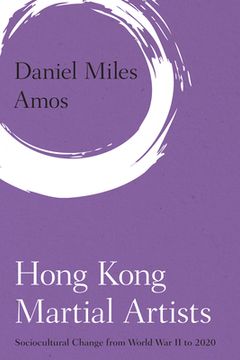
portada Hong Kong Martial Artists: Sociocultural Change from World War II to 2020
Type
Physical Book
Language
English
Pages
228
Format
Hardcover
Dimensions
22.9 x 15.2 x 1.8 cm
Weight
0.51 kg.
ISBN13
9781786615435

Hong Kong Martial Artists: Sociocultural Change from World War II to 2020

Daniel Miles Amos (Author) · Rowman & Littlefield Publishers · Hardcover

Hong Kong Martial Artists: Sociocultural Change from World War II to 2020 - Amos, Daniel Miles

New Book Imported to South Africa
Delivery: 07 Aug - 17 Aug Shipping: 5 to 6 business days.
R 2,977
R 2,977

Synopsis "Hong Kong Martial Artists: Sociocultural Change from World War II to 2020"

This imaginative and innovative study by Daniel Miles Amos, begun in 1976 and completed in 2020, examines sociocultural changes in the practices of Chinese martial artists in two closely related and interconnected southern Chinese cities, Hong Kong and Guangzhou. The initial chapters of the book compare how sociocultural changes from World War II to the mid-1980s affected the practices of Chinese martial artists in the British Crown Colony of Hong Kong and neighboring Guangzhou in mainland China. An analysis is made of how the practices of Chinese martial artists have been influenced by revolutionary sociocultural changes in both cities. In Guangzhou, the victory of the Chinese Communist Party lead to the disappearance in the early 1950s of secret societies and kungfu brotherhoods. Kungfu brotherhoods reappeared during the Cultural Revolution, and subsequently were transformed again after the death of Mao Zedong, and China's opening to capitalism. In Hong Kong, dramatic sociocultural changes were set off by the introduction of manufacturing production lines by international corporations in the mid-1950s, and the proliferation of foreign franchises and products. Economic globalization in Hong Kong has led to dramatic increases both in the territory's Gross Domestic Product and in cultural homogenization, with corresponding declines in many local traditions and folk cultures, including Chinese martial arts. The final chapters of the book focus on changes in the practices of Chinese martial arts in Hong Kong from the years 1987 to 2020, a period which includes the last decade of British colonial administration, as well as the first quarter of a century of rule by the Chinese government.

Customers reviews

Frequently Asked Questions about the Book

All books in our catalog are Original.
The book is written in English.
The binding of this edition is Hardcover.

Questions and Answers about the Book

Do you have a question about the book? Login to be able to add your own question.

Opinions about Bookdelivery

More customer reviews