Tracked shipping to South Africa with premium packaging for just R199 

Ship to
South Africa
0
  • argentina
  • chile
  • colombia
  • españa
  • méxico
  • perú
  • estados unidos
  • internacional

Select your country

Americas

Europe

Rest of the world

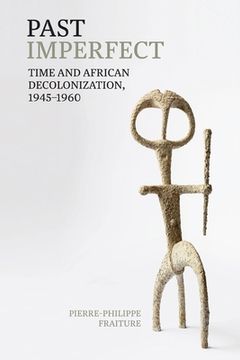
portada Past Imperfect: Time and African Decolonization, 1945-1960
Type
Physical Book
Language
English
Pages
328
Format
Paperback
Dimensions
23.4x15.6x1.8 cm
Weight
0.46 kg.
ISBN13
9781802075366

Past Imperfect: Time and African Decolonization, 1945-1960

Pierre-Philippe Fraiture (Author) · Liverpool University Press · Paperback

Past Imperfect: Time and African Decolonization, 1945-1960 - Fraiture, Pierre-Philippe

New Book Imported to South Africa
Delivery: 20 Oct - 28 Oct Shipping: 14 to 15 business days.
R 1,033
R 1,033

Synopsis "Past Imperfect: Time and African Decolonization, 1945-1960"

This book proposes to examine French and Francophone intellectual history in the period leading to the decolonization of sub-Saharan Africa (1945-1960). The analysis favours the epistemological links between ethnology, museology, sociology, and (art) history. In this discussion, a specific focus is placed on temporality and the role ascribed by these different disciplines to African pasts, presents, and futures. It is argued here that the post-war context, characterized, inter alia, by the creation of UNESCO, the birth of Présence Africaine and the prevalence of existentialism, bore witness to the development of new regimes of historicity and to the partial refutation of a progress-based modernity. This investigation is predicated on case studies from West and Central Africa (AOF, AEF and Belgian Congo) and, whilst adopting a postcolonial methodology, it explores African and French authors such as Georges Balandier, Cheikh Anta Diop, Frantz Fanon, Chris Marker, Joseph Ki-Zerbo, Claude Lévi-Strauss, Alain Resnais, Jean-Paul Sartre and Placide Tempels. This study explores the intellectual legacy of the 'long nineteenth century' and the difficulty encountered by these authors to articulate their anti-colonial agenda away from the modern methodologies of the 'colonial library'. By focussing on issues of intellectual alienation, this book also demonstrates that the post-WW2 period foreshadowed twenty-first century debates on extroversion, racial inequalities, the decolonization of history, and cultural (mis)appropriation.

Customers reviews

Frequently Asked Questions about the Book

All books in our catalog are Original.
The book is written in English.
The binding of this edition is Paperback.

Questions and Answers about the Book

Do you have a question about the book? Login to be able to add your own question.

Opinions about Bookdelivery

More customer reviews