Tracked shipping to South Africa with premium packaging for just R199 

Ship to
South Africa
0
  • argentina
  • chile
  • colombia
  • españa
  • méxico
  • perú
  • estados unidos
  • internacional

Select your country

Americas

Europe

Rest of the world

portada Tamburlaine the Great
Type
Physical Book
Publisher
Year
2021
Language
English
Pages
156
Format
Hardcover
ISBN13
9781513205120

Tamburlaine the Great

Christopher Marlowe (Author) · Mint Editions · Hardcover

Tamburlaine the Great - Christopher Marlowe

New Book Imported to South Africa
Delivery: 09 Oct - 19 Oct Shipping: 5 to 6 business days.
R 346
R 346

Synopsis "Tamburlaine the Great "

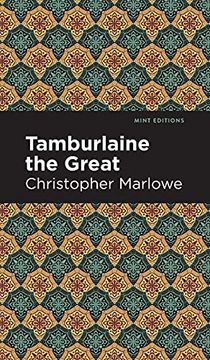
Separated into two parts, Christopher Marlowe's Tamburlaine the Great follows the conquests of an outlaw who slowly rises to power through extreme displays of aggression. When Mycetes, the king of Persia, complains to his brother, Cosroe, about a group of outlaws that were causing trouble, Cosroe claimed that Mycetes was weak, and that a king shouldn't have such a problem. In response, Mycetes sends out a powerful soldier to kill the leader of the outlaws, Tamburlaine. Though the soldier's army was twice the size of Tamburlaine's, the outlaw was hardly discouraged. Using his wit and charm, Tamburlaine attempts to convince the soldier to convert to his side, merging the two armies. As Tamburlaine grows stronger, he gains new allies, such as his clever wife, Zenocrate. Though he seemed to be just a petty outlaw at first, the leaders of prominent Eurasian countries become increasingly concerned as Tamburlaine slowly overcomes armies and nations with force, manipulation, and unlikely alliances. As his makeshift armies continue to challenge elite armed forces, countless lives are at stake as Tamburlaine's bloody ambition only grows. When first released, Tamburlaine the Great both fascinated and disgusted the 16th century audience. Gaining a mix of fame and infamy, Tamburlaine the Great is praised for its masterful imagery and language, enchanting audiences with its drama. However, Marlowe still received criticism for the play's suspected atheist undertones and the violence associated with the play, both real and depicted. With strong themes of humanism, Tamburlaine the Great celebrates the accomplishments of Tamburlaine with little regard to the character's cruelty and aggression, creating a thought-provoking narrative that stays with readers long after the play's conclusion. Often referenced in prominent literary works, Tamburlaine the Great remains relevant with radio and film adaptations, and is still performed in theatres around the world. This edition of Tamburlaine the Great by Christopher Marlowe is now presented in an easy-to-read font and features a striking new cover decision, creating an accessible reading experience. With these accommodations, Tamburlaine the Great is restored to modern standards while the original genius and vivid imagery of Marlowe's poetry is preserved.
Christopher Marlowe
  (Author)
View Author's Page
Christopher Marlowe (1564-1593) was an Elizabethan playwright, poet, and translator. His life remains a great mystery surrounded by all sorts of legends. He was born in Canterbury the same year as William Shakespeare into a prosperous middle-class family. He studied at Corpus Christi College, Cambridge, where he earned a Bachelor of Arts in 1584 and completed his Master's in 1587. Initially, Cambridge authorities were reluctant to grant him the degree because they suspected he had converted to Catholicism, but the Queen's Privy Council intervened on his behalf, emphasizing that Marlowe "had rendered good service to Her Majesty" and had been working for the "benefit of the country." However, the exact nature of the service he provided to the crown is unknown. After his years in Cambridge, Marlowe moved to London where he led a dark and turbulent life (he had a couple of run-ins with the law and had a bad reputation) while trying to make his way as a playwright.

He is the author of seven plays and an incomplete poem: the two parts of Tamburlaine the Great, The Jew of Malta, Edward II, Doctor Faustus, Dido, Queen of Carthage, and The Massacre at Paris, as well as the poem Hero and Leander. In 1593, at just twenty-nine years old, he was arrested and accused of being an atheist. He did not go to prison, and before his case was judged, he died during a brawl in a tavern in Deptford.
See more
See less

Customers reviews

Frequently Asked Questions about the Book

All books in our catalog are Original.
The book is written in English.
The binding of this edition is Hardcover.

Questions and Answers about the Book

Do you have a question about the book? Login to be able to add your own question.

Opinions about Bookdelivery

More customer reviews