Tracked shipping to South Africa with premium packaging for just R199 

Ship to
South Africa
0
  • argentina
  • chile
  • colombia
  • españa
  • méxico
  • perú
  • estados unidos
  • internacional

Select your country

Americas

Europe

Rest of the world

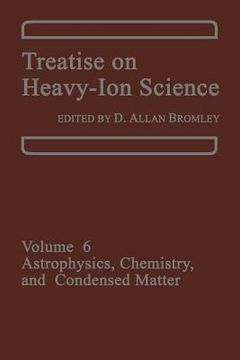
portada Treatise on Heavy-Ion Science: Volume 6: Astrophysics, Chemistry, and Condensed Matter
Type
Physical Book
Publisher
Language
English
Pages
429
Format
Paperback
Dimensions
22.9 x 15.2 x 2.3 cm
Weight
0.60 kg.
ISBN13
9781461581055

Treatise on Heavy-Ion Science: Volume 6: Astrophysics, Chemistry, and Condensed Matter

Bromley, D. A. (Author) · Springer · Paperback

Treatise on Heavy-Ion Science: Volume 6: Astrophysics, Chemistry, and Condensed Matter - Bromley, D. a.

Cheaper New Book Imported to South Africa
Delivery: 02 Sep - 15 Sep Shipping: 12 to 16 business days.
R 1,001
Faster New Book Imported to South Africa
Delivery: 20 Aug - 28 Aug Shipping: 4 to 5 business days.
R 1,269
R 1,001

Synopsis "Treatise on Heavy-Ion Science: Volume 6: Astrophysics, Chemistry, and Condensed Matter"

For 75 years the stopping of energetic ions in matter has been a subject of great theoretical and experimental interest. The theoretical treatment of the stopping of ions in matter is largely due to the work of Bohr, 1-3 Bethe,4-6 Bloch,7. s and Lindhard,9-12 and it has been reviewed by Bohr,3 Fano,13 17 20 Jackson,14 Sigmund,15 Ahlen,16 and Ziegler et al. - Soon after the discovery of energetic particle emission from radioactive materials, there was interest in how these corpuscles were slowed down in traversing matter. In 1900, Marie Curie stated 21 the hypothesis that Hies rayons alpha sont des projectiles materiels susceptibles de perdre de leur vitesse en travers ant la matiere. " Early attempts to evaluate this were incon- clusive for there was not yet an accurate proposed model of the atom. Enough experimental evidence was collected in the next decade to make stopping power theory one of the central concerns of those attempting to develop an atomic model. J. J. Thomson, director of the prestigious Cavendish Laboratory, and Niels Bohr, a fresh postdoctoral scientist at Rutherford's Manchester Laboratory, both published almost simultaneously22. 23 an analysis of the stopping of charged particles by matter, and each contained many of their divergent ideas on the model of an atom. Thomson ignored in his paper the Rutherford alpha-particle scattering 24 experiment of a year before. But the nuclear atom with a heavy positively 25 charged core was the basis of Bohr's ideas.

Customers reviews

Frequently Asked Questions about the Book

All books in our catalog are Original.
The book is written in English.
The binding of this edition is Paperback.

Questions and Answers about the Book

Do you have a question about the book? Login to be able to add your own question.

Opinions about Bookdelivery

More customer reviews