Tracked shipping to South Africa with premium packaging for just R199 

Ship to
South Africa
0
  • argentina
  • chile
  • colombia
  • españa
  • méxico
  • perú
  • estados unidos
  • internacional

Select your country

Americas

Europe

Rest of the world

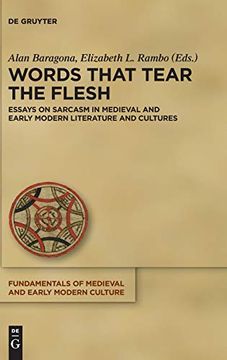
portada Words That Tear the Flesh (Fundamentals of Medieval and Early Modern Culture)
Type
Physical Book
Publisher
Year
2018
Language
English
Pages
360
Format
Hardcover
ISBN13
9783110562118
Edition No.
1

Words That Tear the Flesh (Fundamentals of Medieval and Early Modern Culture)

Stephen Alan / Rambo, Elizabeth Louise Baragona (Author) · De Gruyter · Hardcover

Words That Tear the Flesh (Fundamentals of Medieval and Early Modern Culture) - Stephen Alan / Rambo, Elizabeth Louise Baragona

Cheaper New Book Imported to South Africa
Delivery: 14 Oct - 22 Oct Shipping: 13 to 14 business days.
R 2,297
Faster New Book Imported to South Africa
Delivery: 02 Oct - 12 Oct Shipping: 5 to 6 business days.
R 2,901
R 2,297

Synopsis "Words That Tear the Flesh (Fundamentals of Medieval and Early Modern Culture) "

The rhetorical trope of irony is well-trod territory, with books and essays devoted to its use by a wide range of medieval and Renaissance writers, from the Beowulf-poet and Chaucer to Boccaccio and Shakespeare however, the use of sarcasm, the ""flesh tearing"" form of irony, in the same literature has seldom been studied at length or in depth. Sarcasm is notoriously difficult to pick out in a written text, since it relies so much on tone of voice and context. This is the first book-length study of medieval and Renaissance sarcasm. Its fourteen essays treat instances in a range of genres, both sacred and secular, and of cultures from Anglo-Saxon to Arabic, where the combination of circumstance and word choice makes it absolutely clear that the speaker, whether a character or a narrator, is being sarcastic. Essays address, among other things, the clues writers give that sarcasm is at work, how it conforms to or deviates from contemporary rhetorical theories, what role it plays in building character or theme, and how sarcasm conforms to the Christian milieu of medieval Europe, and beyond to medieval Arabic literature. The collection thus illuminates a half-hidden but surprisingly common early literary technique for modern readers.

Customers reviews

Frequently Asked Questions about the Book

All books in our catalog are Original.
The book is written in English.
The binding of this edition is Hardcover.

Questions and Answers about the Book

Do you have a question about the book? Login to be able to add your own question.

Opinions about Bookdelivery

More customer reviews